sewage treatment plant Archives - Page 10 of 10 - Water Treatment Plants

STP-Plant.png

An Effluent treatment plant installation must be outfitted with the appropriate O&M protocol. The creation of an inventory of maintenance needs is the first stage in the O & M preparation process. This inventory is often contained in the Operation & Maintenance (O&M) Manual that the contractor who designed and constructed the installation created for it. After finishing the job, he gives the principal for whom he built the installation the handbook.

The O & M Manual would outline the necessary maintenance in the sections listed below:

Equipment Maintenance:

This part contains record-keeping forms as needed and schedules outlining the various equipment’s periodic maintenance requirements. There is also a list of equipment suppliers, telephones, and service providers included. This section also includes the manufacturer’s O&M requirements. This portion of the O&M Manual has to be carefully read by the operation and maintenance contractor and the ETP maintenance crew.

Storeroom and Spare Components Inventory:

It contains a list of essential replacement parts, some of which may have protracted delivery dates. Contact information for nearby manufacturers or dealers of the various pieces of installation equipment is useful when looking for advice or suggestions. The location of the spares’ storage is also specified in this section.

The manufacturer’s O&M documentation:

Cut-sheets and other manufacturer information are also included in the O & M handbook. To guarantee appropriate planning and execution of O & M operations, ETP employees and the O & M Contractor should become familiar with all of these papers.

In the absence of these documents, equivalent ones should be created based on research into the plant, previous experience, the process, the equipment, and communications with manufacturers and suppliers.

Role of plant operator:

In order to guide the effluent and settled sludge to different units for / after treatment, plant operator(s) operate and maintain screens, grit removal devices, aerators, valves, pumps, etc. in shifts.

They ought to be able to see issues and serve as the Plant manager’s ears and eyes. Additionally, they must help the electrical and mechanical maintenance technician(s) with the activities associated with preventative and breakdown maintenance.

The Effluent treatment plant is operated by a team. In order to ensure intended performance, it necessitates adequate team selection, training need assessment, on-the-job moulding, issue forecasting, training, laboratory and statistical analysis, and troubleshooting. All of these needs should be covered by the O & M employee profile.

It is necessary to locate backup workshop facilities since it is impractical to set up a repair/maintenance shop on the site to perform extensive overhauls and repairs to mechanical and electrical equipment. A good ETP operating contractor may have his or her own central resources set up in practical locations to assist in carrying out such heavy repairs and maintenance, or he may have an agreement to move such resources, whether his or her own or from a trade, to the site with matching capability to establish temporarily for task completion. If the ETP operation is to be outsourced, this should be considered.

Regulations for Safety Operation

Hazard Identification in ETP Operators of effluent treatment plants are subjected to unpleasant odours and noise from machinery while working both indoors and outdoors. Physical labour and working in dirty environments are common in operators’ jobs. Additionally, because plants are open 24 hours a day, 7 days a week, operators rotate through three shifts of eight hours each, including weekends and holidays. Operators might have to put in extra hours.

Additionally, the reagents utilised in the waste water processing as well as the chemicals created during the waste water treatment expose ETP personnel to a number of dangerous chemical agents. Acute poisoning and chemical accidents might result from these chemical substances. Considerations for occupational safety and health (OSH) are increasingly important in today’s business operations. To reduce OSH risks in the operation of ETP, it is required to identify hazards and develop preventative and corrective actions.

Why choose Netsol water solutions!

In many different industries, Netsol offers a wide variety of services and does business all throughout the globe. With the added advantage of our continuous preventive maintenance and backup support, our services also cover the specification and suggestion of water treatment equipment, reverse osmosis, initial installation of water softeners, and filtering systems.

Fixing a client’s water issues involves a human connection. Problem-solving is a customer-specific activity since no single mass-produced item can offer a universal answer for all clients. The design, servicing and installation, are just as significant in our client/supplier relationship as the equipment we may finally deliver because the problems might vary and our diagnosis may vary as a result.

For any other support, inquiries, or product purchases, call on +91-9650608473 or email at enquiry@netsolwater.com

Screenshot-61-1-1280x776.png

Reverse osmosis is a technique used to purify water by removing a wide variety of salts. A natural process involving fluid flow is osmosis. Over a membrane barrier that is semi-permeable. It is the method by which water reaches the leaves at the top of plants and by which nutrients nourish the cells in our bodies.Reverse osmosis is regarded as a considerably safer method of creating clean water for many commercial and industrial purposes. Commercial RO plants come in different sizes and capacities. When one has to make a choice for their commercial setup, the most important point of remark is the sufficiency which is determined by the plant size. The required permeate quantity, feed water salinity, and anticipated permeate quality will determine the size of the RO and membrane selection.

In order to assist you in choosing a best fit for your commercial spaces, let us have a look at some of the standard capacities of commercial RO plants

Commercial RO plant capacity­:

Commercial RO plant are available in a range of forms and dimensions. LPH, which stands for litres per hour and denotes that this RO can process up to how many litres per hour, is the unit used to classify water plants based on the amount of water that is cleansed. Water is purified in a number of processes in ROs. Homes and small workplaces can use these ROs. Some of the standard LPH systems are mentioned below as:

100 LPH RO plant:

It has a 100-liter capacity and can operate for 8 to 10 hours each day. You may obtain enough clean and safe normal water if you have a commercial 100 LPH RO. These 100 LPH RO plants are often found in small enterprises and educational institutions.

250 LPH RO Plant:

As its name suggests, a 250 LPH RO plant can purify up to 250 litres of water per hour.

500 LPH RO plant:

Reverse osmosis plant with a 500 LPH capacity can produce 500 litres of water every hour. 500 LPH RO systems frequently contain sand media filters, carbon media filters, and micron filters.

1000 LPH RO plant:

The most reliable and powerful 1000 LPH RO plant is suitable for large businesses. A typical 1000 LPH RO system includes sand media filters, carbon media filters, and micron filters. It has both a high-pressure pump and a dosing pump. Also includes a premium RO membrane, a pressure gauge, and a Rota-meter.

2000 LPH RO:

This is a powerful RO system. It quickly produces a big supply of filtered, safe, clean, and nutritious water (2000 litres per hour). It is ideal for circumstances involving excessive water use, such as many houses in a small area, a big tank, etc.

Conclusion:

Each and every person wants to drink clean water. Therefore, think about getting a Commercial RO for your office or any other place of business if you want to drink clean water and become healthier than you were.

Netsol helps to bring the water in its purest form with so much ease. We can make a choice of best fit commercial RO plant for your set up as per your requirement and convenience. The only thing you have to do is to contact us.

You may rely on us for commercial reverse osmosis systems as well as commercial water softeners, military water purification systems, commercial water filters, and accessories and consumables. Visit us online or call on +91-9650608473 or email at enquiry@netsolwater.com to learn more.

Effluent-Treatment-Plant-Manufacturer-in-Faridabad.png

Effluent treatment is a method used to transform wastewater or effluent into a water that flows into a receiving body of water and may either be immediately reused or returned to the water cycle with little to no negative environmental effects. Because cleaned wastewater may subsequently be utilised for other purposes, the latter process is referred to as water reclamation. A wastewater treatment plant (WWTP), also known as a water resource recovery facility (WRRF) or an Effluent treatment plant, is where the treatment process takes place. Municipal wastewater contains contaminants from families and small businesses that are either removed or broken down and is thus rendered as safe water for certain uses.Water treatment plant provide the best effluent treatment plant manufacturer in hyderabad.

Best Effluent treatment plant with Netsol at Hyderabad:

We are delighted to present ourselves as Effluent Treatment Plant Manufacturers in Hyderabad as one of the fastest-growing and top companies. The industry leader in the production, distribution, and supply of Effluent Treatment Plants, Commercial RO Plants, and Industrial RO Plants is Netsol Water.

We are the biggest provider of goods for waste and wastewater treatment both in Hyderabad, India, and globally. Manufacturing sewage treatment facilities, ETP plants, industrial water treatment systems, and water ATMs are our areas of expertise. We provide a wide variety of items to address water problems.

Industries produce a large amount of very hazardous effluents throughout the production process that have extremely high COD, BOD, TS, and TDS levels as well as an unpleasant odour. In order to purify industrial waste water for reuse and to protect the environment from the detrimental effects of the effluent, one form of waste water treatment process is known as an effluent treatment plant.

Depending on the industry, industrial effluents comprise a range of different substances. Some effluents include hazardous substances while others contain oils and grease (e.g., cyanide). To fulfil the strict pollution control standards, Netsol has developed a method for treating industrial wastewater that operates economically and discharges zero liquids. Different techniques have been developed by us for the cost-effective treatment of wastewater depending on the kind of sewage.

One of the best products for waste water treatment plants, water resource recovery plants, or effluent treatment plants in Hyderabad is Netsol. Additionally, we provide the top waste water treatment plant maintenance services in Hyderabad and across India.

Advantages of Netsol Effluent treatment plants:

  • Highest Steam Economy
  • The least expensive operation and maintenance.
  • Customer Friendly
  • Simple to Upgrade.
  • CPCB-approved technology (Central Pollution Control Board).

For each of our customers, we offer comprehensive and tailored solutions.  Our production facility adheres to international rules and standards and makes use of well-known inspection methods. The business has gained distinction for taking on difficult projects, encouraging innovation, adopting emerging technology, and improving the lives of their customers.

Why work with Netsol!

Due to our extensive expertise in this field, we are able to provide Effluent Treatment Plant to our customers globally. We are currently providing a top-notch effluent water treatment facility that are equipped with modern features for our clients. We develop and produce treatment facilities in accordance with the specifications specified by our clients under the direction of skilled professionals. Utilizing cutting-edge technology, the plant cleans industrial effluent while operating sustainably to ensure complete client satisfaction. Our industrial wastewater treatment systems are top-notch for handling industrial wastewater in the most controlled manner. We produce our effluent water treatment facilities in compliance with international quality standards, and they supply clean water for ecological removal.

So if you are looking for effluent treatment plant manufacturer in Hyderabad then contact Us. Water treatment plant provide best quality of water treatment plants in all over India.

For any sort of other support, inquiries, or product purchases, call on +91-9650608473 or email at enquiry@netsolwater.com.

etp-netsol-1280x869.png

Industrial wastewater contains a variety of pollutants, necessitating the use of a specific treatment method called Effluent treatment plant, also known as an ETP. The goal of Effluent treatment plant process is to discharge clean water into the environment, while protecting it from the negative effects of the effluent.

Depending on the industry, industrial effluents comprise a range of different substances. Some effluents contain hazardous substances (e.g., cyanide), while others contain oils and grease. Additionally, few degradable organic contaminants are also present in factory effluents from the production industries.

Let’s understand the treatment processes of effluent treatment plants or ETPs.

Effluent Treatment Plant Design

The ETP design is based on the kind and volume of effluent discharged by various industries, as well as the availability of land. In most of the cases, Common Effluent Treatment Plants (CETP) is preferable over Effluent Treatment Plants, if land is scarce in the industry.

Effluent treatment plant process

Depending on the kind of effluent, different effluents require different treatments. Before effluent is released into the environment, wastewater enters the effluent treatment plant and undergoes a number of processes.

The steps of the effluent treatment plant process are as follows:

  1. Preliminary Treatment

The main aim of preliminary treatment is physical separation of large-sized pollutants and materials, like cloth, paper, plastic, and wood logs. This process entails:

  • Screening: In effluent treatment processes, this is the initial unit activity that takes place. It uses equipment, known as a screen that consists of consistently sized apertures, used to catch big floating objects.
  • Sedimentation: It is a physical method of purifying water that eliminates suspended particulates from the water, by employing gravity.
  • Grit Chamber: The effluent that enters the grit chamber eliminates the heavy inorganic materials, which have found their way into the sewers, such as gravel, metal shavings, and sand. This method is essential as grit removal can help in avoiding pump damage and operational issues.
  • Clarifiers: Before biological treatment, particles deposited by sedimentation are continuously removed from the tank, by mechanical means.
  1. Primary treatment

Its goal is to remove items the float and settle such as suspended solids and organic debris. Both physical and chemical techniques are employed in this treatment. It contains:

  • Coagulation: It is a procedure that involves the addition of coagulants, in order to hasten the quick settling of tiny solid particles in a liquid, into larger mass. It enables filtration and sedimentation for particle removal.
  • Flocculation: It is a physical process and involves destabilization of particles. These particles are then combined into substantial aggregates, in order to make it simple to remove them from the water.
  • Neutralization: The major goal of this procedure is to keep the pH in the range of 6-9, which is necessary to satisfy the needs of the various ETP processing units.
  • Primary Clarifiers: These are used to decrease the water’s velocity so that organic solids will settle to the tank’s bottom, and contain equipment for removing floating solids and oil from the surface.
  1. Secondary or biological treatment

The major goal of this treatment is to remove any remaining organic matter and suspended particulates from the effluent, from the initial treatment. This stage involves biological activities.

  • Activated Sludge Process: It uses air and a biological floc made of bacteria to clean industrial effluent.
  • Aerated Lagoons: It is an artificial aeration system that is added to a treatment pond, to aid in the biological oxidation of wastewater.
  • Trickling filters: These filters are also referred to as sprinkling filters, and are frequently used for the biological treatment of sewage and industrial wastewater.
  • Rotating Biological Contactor: This process involves exposing wastewater to a biological medium, in order to filter out pollutants before releasing the cleaned wastewater into the environment.
  1. Advanced/tertiary treatment

The goal of tertiary treatment is to provide a final step of treatment to enhance the effluent quality, to the appropriate level before it is reused, recycled, or released into the environment.

  • Chemical coagulation and sedimentation: Both methods are employed to increase the removal of solids from effluent.
  • Filtration: The cleared effluent is sent through the nearby filtration plant’s big filter blocks, to ensure high-quality water.
  • Reverse osmosis: In this method, effluent is forced under pressure across a membrane, which traps impurities on one side and lets clean water through to the other.
  • UV disinfection: This method is regarded as the best one for treating effluent. By maintaining the water quality, it ensures that no residual infection is left in the water.
Conclusion

An ETP system is a fully automated system. Because of this, it needs utility services for installation and appropriate maintenance, just like any other mechanical plant.

Choose the best manufacturers of effluent treatment plants in India

Since a decade, Netsol Water have been providing water, wastewater and effluent treatment services in India. We have extensive knowledge and expertise in the operation and upkeep of water treatment facilities, wastewater treatment facilities (ETP/STP), softening processes, and iron removal methods. We construct and manage water treatment facilities that adhere to state pollution control board standards.

For any other support, inquiries, or product purchases, call on +91-9650608473 or email at enquiry@netsolwater.com

Netsol Water

Headquarter

Plot No. 164,

Udyog Vihar Extension,

Surajpur, Greater Noida,

Uttar Pradesh 201306
+ 91-9650608473

www.netsolwater.com

info@netsolwater.com

LOCATIONS

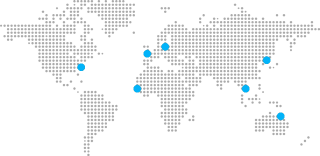
We Are Everywhere in India & Overseas.


GET IN TOUCH

Follow Our Activity

TO get an update about our daily activity just follow us and Join the Hands to Save Mother-Earth