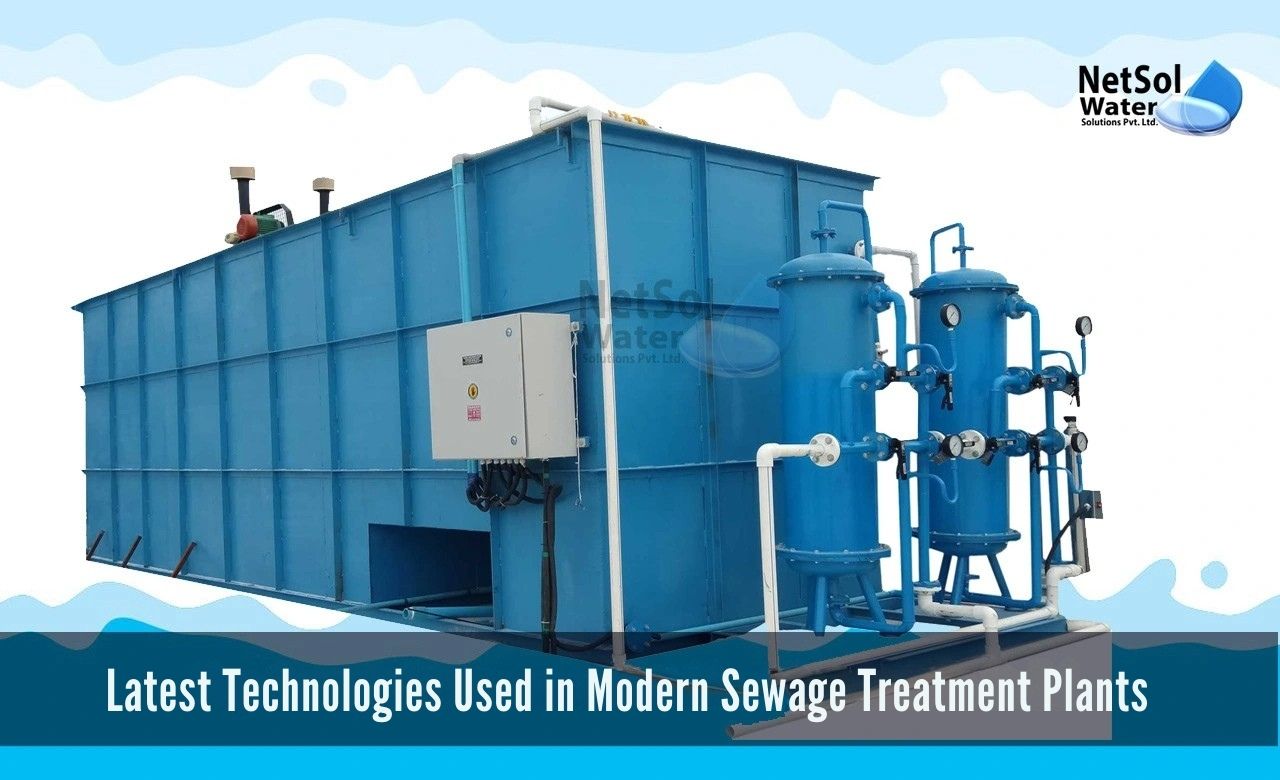
The role of sewage treatment plants is a very essential in ensuring the public health, preserving the water resources, and ensuring the balance of the environment. Nonetheless, conventional sewage treatment systems were mostly developed to remove simple pollutants and tend to perform poorly in accordance with the current requirements of discharges and reuse. The high rate of urbanization, increasing water shortage and evolving characteristics of wastewater has necessitated the use of modern methods of treatment. This has led to the modern sewage treatment plants being based on new technologies that enhance efficiency, lessen space demands, quality of the treated water and stability in operation in the long run. Understanding the latest technologies used in modern sewage treatment plants helps planners, builders, and industries make informed decisions while designing or upgrading treatment systems.
Latest Technologies Used in Modern Sewage Treatment Plants
High Biological Treatment Technology
New STPs employ high efficiency biological treatment processes that extend beyond the traditional activated sludge processes. The reason why Moving Bed Biofilm Reactor technology is so popular is because it is capable of managing changes in loads without experiencing a change in performance. In this type, microorganisms develop on specially prepared media such that the concentration of biomass is amplified and the size of tanks is not increased. This is why it is appropriate in areas that are not spacious.
Another popular technology that is being used in contemporary plants is sequential Batch Reactor systems. These systems work on a cycle that is timed which incorporates aeration, settling and discharging in one tank. This conscious process enables it to remove nutrients in a more efficient manner and be able to respond to changing inflows.
One of the newest technologies of biological treatment is the Membrane Bioreactor. It incorporates biological treatment and membrane filtration, thereby producing very high-quality effluent. The membrane serves as a physical barrier, which does not allow solids suspended and pathogens to be transferred into the treated water and hence the use of the membrane in reuse is suitable.
Tertiary and Polishing Treatment Technologies
Modern sewage treatment facilities have sophisticated polishing systems in order to achieve reuse and high discharge standards. The ultra-filtration units eliminate the particles, bacteria, and any remaining organic matter which is not biologically treated. This guarantees the uniformity of the water clarity and enhances dependability of downstream reuse.
Activated carbon filtration is also employed more as a solution to problems with odor, color, and trace organics. It improves aesthetic water quality and promotes reuse in applications that include cooling towers, flushing and landscaping.
Sophisticated disinfection systems contribute to safety. Such systems will be developed to help inactivate dangerous microorganisms and minimise reliance on high doses of chemicals.
Contemporary Sludge Management and Treatment
Handling of sludge is an important process of sewage treatment and this has been enhanced greatly by the modern technologies. Improved sludge dewatering systems make the sludge less moist and this makes transportation and disposal less expensive. Stabilization processes contribute to the containment of odor and pathogen reduction, which makes the sludge less dangerous to address.
Effective sludge management is not only a way of enhancing the hygiene of plants, but also it also helps to increase the overall operational reliability of the plant, particularly on residential and commercial projects.
Automation and Smart Monitoring System
The modern sewage treatment plants are characterized by automation. Parameters that are constantly checked by sensors and control systems include the flow rate, dissolved oxygen, organic load, and sludge load. This online data enables accurate process management, which means a steady performance of the treatment.
The remote monitoring and control systems allow the operators to identify issues in time and implement the appropriate solutions before the failures happen. This saves time, decreases the cost of operation and limits the use of manual supervision.
Why Sewage Treatment Technology must be Evolving
Transforming Wastewater Characteristics
The contemporary wastewater has a blend of domestic sewage, chemicals, detergents, and other pollutants that the older systems were not formed to manage. The high technologies are more resilient to such fluctuations, which gives the same treatment results.
Sterner Environmental Rules
Discharge and reuse standards are getting tighter and tighter by pollution control authorities. Technologies should be developed to reach lower levels of pollutants regularly and keep the compliance with the various operating conditions.
Space and Energy Constraints
City projects are characterized by a shortage of space. The new technologies are small and consume less energy hence they can be used in a high density development without affecting performance.
Increasing Water Reuse Requirement
The lack of water has led to heightened need of treated wastewater as a source of reusable water. Further development of technologies of treatment allows reuse that is safe and reliable, eliminating the need to use freshwater.
Conclusion
The latest technologies used in modern sewage treatment plants reflect a shift toward efficiency, sustainability, and reliability. The use of advanced biological systems, effective tertiary treatment, enhanced sludge management, and intelligent automation has changed sewage treatment into a disposal process to the solution that is a resource recovery solution. With the increased regulatory measures and the necessity to reuse water, it is no longer a choice to implement modern water treatment technologies. It is a serious investment in the long-term environmental welfare, stability in operations, and sustainable water management.