sewage treatment plant manufacturer Archives - Water Treatment Plants

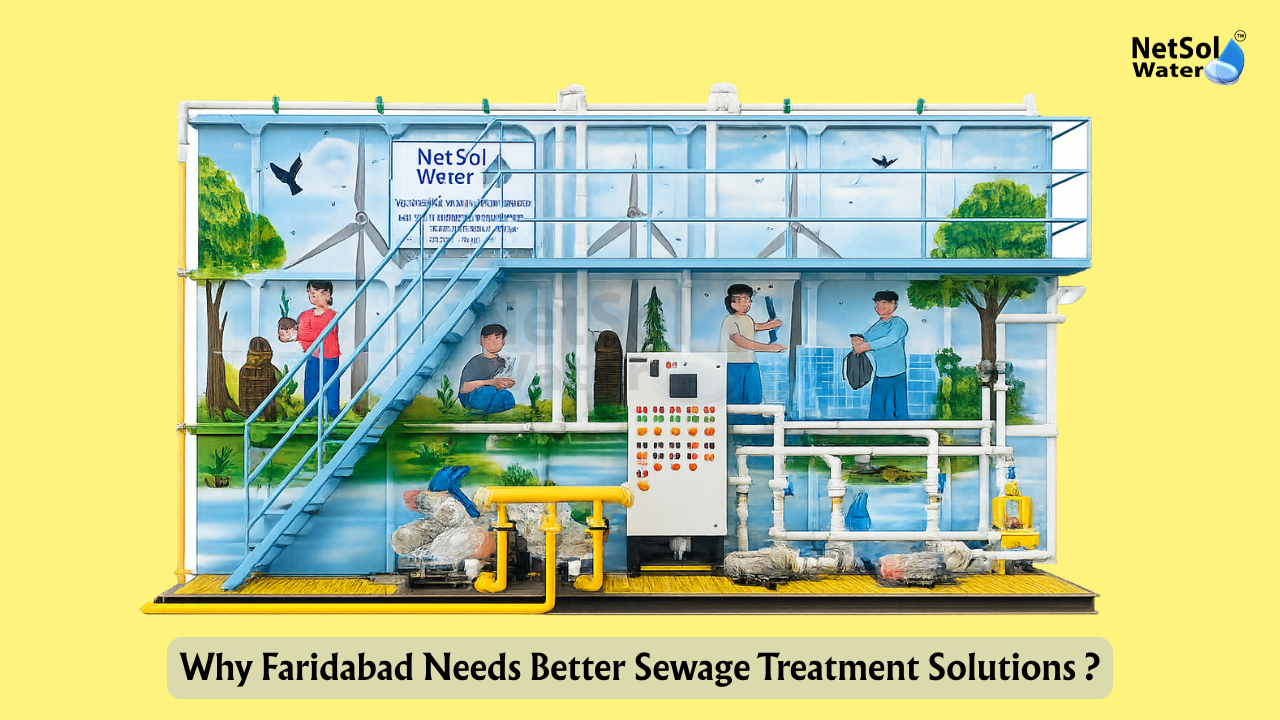
Why Faridabad Needs Better Sewage Treatment Solutions

Faridabad has grown well beyond its industrial roots over the years, with residential societies, educational institutions, and commercial campuses expanding rapidly across the city. All that growth brings a challenge that doesn’t get talked about nearly enough, where does the sewage from all these buildings actually go, and is it being treated properly before it ends up somewhere it shouldn’t. Increasingly, the answer for responsible developers and facility managers has been installing their own treatment system, making the choice of a reliable Sewage Treatment Plant Manufacturer In Faridabad a decision that shapes a property’s long term operations, not just something handled once during construction and forgotten. In this blog we will discuss about the why faridabad needs better sewage treatment solutions.

Why Municipal Infrastructure Can’t Carry the Full Load

1) Growth Has Outpaced Civic Capacity

Faridabad’s expansion, much like several other NCR cities, has moved faster than the municipal sewage network could reasonably keep up with. Many newer residential sectors and institutional campuses still depend heavily on tankers or informal disposal arrangements rather than a dependable centralized system. This gap becomes especially visible during monsoon season, when overwhelmed civic infrastructure struggles even harder to keep pace with demand across the city.

2) Regulatory Requirements Have Tightened Considerably

Residential societies and institutional buildings above a certain size are now expected to manage their own sewage treatment rather than leaning entirely on overstretched municipal capacity. This shift reflects a broader regional push to hold larger developments accountable for their own wastewater footprint, and it’s a trend that shows no signs of reversing given how much pressure civic bodies already face managing existing infrastructure.

3) What Happens When Compliance Gets Ignored

Properties that delay setting up proper sewage treatment often face escalating problems, formal notices from pollution control authorities, difficulty securing occupancy certificates for new construction, and in some cases, direct restrictions on further development until compliance is demonstrated. What starts as a manageable planning decision can turn into a genuine operational headache if left unaddressed too long.

What a Properly Designed STP Actually Delivers

A) Real Reduction in Tanker Dependency

Tanker reliance is expensive and unpredictable, particularly during peak summer months when demand spikes across the entire city at once. A functioning sewage treatment plant gives a property genuine independence from this constant scramble, freeing facility managers from the recurring stress of coordinating tanker schedules that never quite align with actual need.

B) Treated Water That Can Actually Be Reused

Sewage treated to a proper standard works well for landscaping, flushing systems, and general non potable uses around a campus. This reuse meaningfully cuts down how much fresh water a property needs to source externally on a daily basis, which matters increasingly as groundwater levels across the region continue to decline year after year.

C) Better Sanitation and Reduced Odor Issues

Beyond the compliance angle, a well designed STP genuinely improves day to day living conditions for residents and staff. Poorly managed sewage systems create odor problems and occasional overflow issues that affect quality of life directly, something that matters enormously for residential societies where these problems translate straight into resident complaints and dissatisfaction.

What Separates a Reliable Manufacturer From the Rest

1) Designing Around Real Occupancy Patterns

A residential society has a fairly steady flow pattern, while a school or office campus deals with sharp spikes tied to specific hours of the day. A capable Sewage Treatment Plant Manufacturer In Faridabad designs around this difference rather than treating every project the same way regardless of how it actually functions day to day. Getting this wrong means either a system that struggles during peak load or one that’s needlessly expensive to run for a facility that never generates that much wastewater to begin with.

2) Space Efficient Systems for Tighter Sites

Not every property has room to spare for a large treatment plant. Compact and modular systems have become the practical choice for many sites, delivering full treatment capability without eating into space that could otherwise serve residents or students. This matters particularly for older residential societies retrofitting a treatment system onto a site that wasn’t originally planned with one in mind.

3) Ongoing Support That Doesn’t Disappear After Installation

An STP needs consistent monitoring, sludge management, and periodic servicing to keep functioning properly for years. A manufacturer who remains genuinely involved after handover makes a measurable difference to how reliably the system performs over its lifetime, catching small issues before they become expensive, disruptive failures that affect an entire community.

Technology Choices That Match the Site

Different STP technologies suit different situations. Some sites benefit from compact bioreactor systems that handle variable loads well, while others do fine with more conventional treatment approaches where space isn’t as constrained. A manufacturer who actually explains these tradeoffs, rather than pushing whichever system is easiest to sell, helps a property make a genuinely informed decision.

Why This Shift Matters for Faridabad’s Future

As more residential and institutional developments across Faridabad start treating sewage management as essential infrastructure rather than a compliance formality, the city’s overall water and civic pressure eases in a small but meaningful way. That shift depends heavily on choosing a manufacturer who actually understands the local context rather than applying a one size fits all approach borrowed from projects in an entirely different city with different regulatory expectations and water conditions.

Properties that get this right early tend to avoid the scramble that comes with reactive compliance, dealing with pollution board notices, rushed installations under deadline pressure, or systems that never quite perform the way they were promised to. Planning properly from the start, with a manufacturer who genuinely understands Faridabad’s specific conditions, saves both money and stress over the property’s operational life.

NetSol Water brings genuine regional experience to sewage treatment projects across Faridabad, studying each property’s real occupancy and flow patterns before recommending a system, and staying involved well after installation to make sure the plant keeps performing the way it should for years to come.
Latest-Technologies-Used-in-Modern-Sewage-Treatment-Plants.jpg

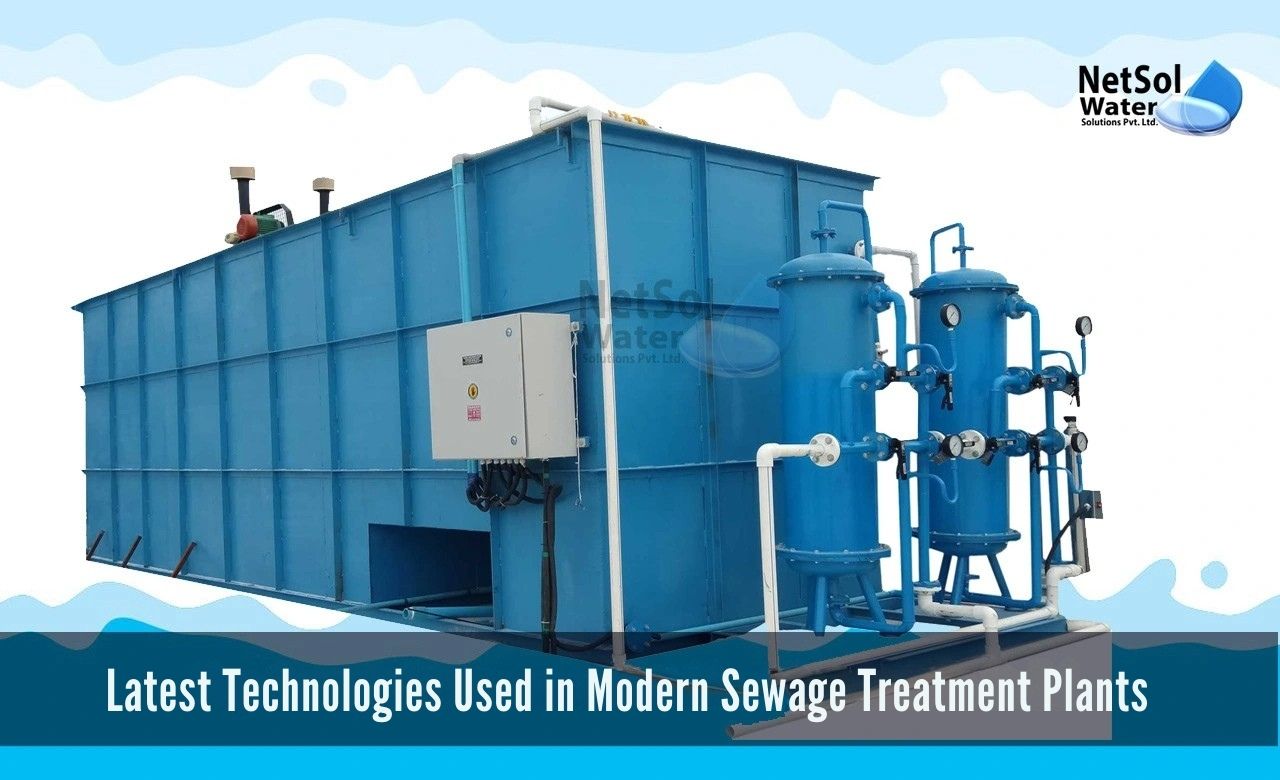
The role of sewage treatment plants is a very essential in ensuring the public health, preserving the water resources, and ensuring the balance of the environment. Nonetheless, conventional sewage treatment systems were mostly developed to remove simple pollutants and tend to perform poorly in accordance with the current requirements of discharges and reuse. The high rate of urbanization, increasing water shortage and evolving characteristics of wastewater has necessitated the use of modern methods of treatment. This has led to the modern sewage treatment plants being based on new technologies that enhance efficiency, lessen space demands, quality of the treated water and stability in operation in the long run. Understanding the latest technologies used in modern sewage treatment plants helps planners, builders, and industries make informed decisions while designing or upgrading treatment systems.

Latest Technologies Used in Modern Sewage Treatment Plants

High Biological Treatment Technology

New STPs employ high efficiency biological treatment processes that extend beyond the traditional activated sludge processes. The reason why Moving Bed Biofilm Reactor technology is so popular is because it is capable of managing changes in loads without experiencing a change in performance. In this type, microorganisms develop on specially prepared media such that the concentration of biomass is amplified and the size of tanks is not increased. This is why it is appropriate in areas that are not spacious.

Another popular technology that is being used in contemporary plants is sequential Batch Reactor systems. These systems work on a cycle that is timed which incorporates aeration, settling and discharging in one tank. This conscious process enables it to remove nutrients in a more efficient manner and be able to respond to changing inflows.

One of the newest technologies of biological treatment is the Membrane Bioreactor. It incorporates biological treatment and membrane filtration, thereby producing very high-quality effluent. The membrane serves as a physical barrier, which does not allow solids suspended and pathogens to be transferred into the treated water and hence the use of the membrane in reuse is suitable.

Tertiary and Polishing Treatment Technologies

Modern sewage treatment facilities have sophisticated polishing systems in order to achieve reuse and high discharge standards. The ultra-filtration units eliminate the particles, bacteria, and any remaining organic matter which is not biologically treated. This guarantees the uniformity of the water clarity and enhances dependability of downstream reuse.

Activated carbon filtration is also employed more as a solution to problems with odor, color, and trace organics. It improves aesthetic water quality and promotes reuse in applications that include cooling towers, flushing and landscaping.

Sophisticated disinfection systems contribute to safety. Such systems will be developed to help inactivate dangerous microorganisms and minimise reliance on high doses of chemicals.

Contemporary Sludge Management and Treatment

Handling of sludge is an important process of sewage treatment and this has been enhanced greatly by the modern technologies. Improved sludge dewatering systems make the sludge less moist and this makes transportation and disposal less expensive. Stabilization processes contribute to the containment of odor and pathogen reduction, which makes the sludge less dangerous to address.

Effective sludge management is not only a way of enhancing the hygiene of plants, but also it also helps to increase the overall operational reliability of the plant, particularly on residential and commercial projects.

Automation and Smart Monitoring System

The modern sewage treatment plants are characterized by automation. Parameters that are constantly checked by sensors and control systems include the flow rate, dissolved oxygen, organic load, and sludge load. This online data enables accurate process management, which means a steady performance of the treatment.

The remote monitoring and control systems allow the operators to identify issues in time and implement the appropriate solutions before the failures happen. This saves time, decreases the cost of operation and limits the use of manual supervision.

Why Sewage Treatment Technology must be Evolving

Transforming Wastewater Characteristics

The contemporary wastewater has a blend of domestic sewage, chemicals, detergents, and other pollutants that the older systems were not formed to manage. The high technologies are more resilient to such fluctuations, which gives the same treatment results.

Sterner Environmental Rules

Discharge and reuse standards are getting tighter and tighter by pollution control authorities. Technologies should be developed to reach lower levels of pollutants regularly and keep the compliance with the various operating conditions.

Space and Energy Constraints

City projects are characterized by a shortage of space. The new technologies are small and consume less energy hence they can be used in a high density development without affecting performance.

Increasing Water Reuse Requirement

The lack of water has led to heightened need of treated wastewater as a source of reusable water. Further development of technologies of treatment allows reuse that is safe and reliable, eliminating the need to use freshwater.

Conclusion

The latest technologies used in modern sewage treatment plants reflect a shift toward efficiency, sustainability, and reliability. The use of advanced biological systems, effective tertiary treatment, enhanced sludge management, and intelligent automation has changed sewage treatment into a disposal process to the solution that is a resource recovery solution. With the increased regulatory measures and the necessity to reuse water, it is no longer a choice to implement modern water treatment technologies. It is a serious investment in the long-term environmental welfare, stability in operations, and sustainable water management.

Common-Mistakes-in-STP-Installation-and-How-to-Avoid-Them.webp

Common Mistakes in STP Installation and How to Avoid Them

Common Mistakes in STP Installation matter for every project that handles wastewater. A wrong decision can raise costs and cause system downtime. In this blog, we will show the main errors that happen during STP installation and how teams can prevent them. Netsol Water is the leading supplier that installs plants across many cities.

Site Survey and Plant Sizing Errors

Site survey and correct sizing form the base for a long lasting STP. If teams skip a careful survey they risk building a plant that cannot handle real flows. A correct survey saves money on later fixes and helps the plant meet discharge rules. Let us have a look on some common failings and how to fix them.

Underestimating Wastewater Load

Many teams estimate flow using ideal numbers instead of real data. They use design values that do not match peak loads. This error causes frequent overflow and stress on biological processes. To avoid this use measured flow data for at least one month. If you cannot get long term data then gather samples at different hours and on weekdays and weekends. Include seasonal shifts in water use. Also include any future expansion plans in the load calculation. Calibrate the biological design using real BOD and TSS numbers. Use safety margins that are realistic and not extreme. By sizing the plant to measured peaks you avoid overworking aeration units and you keep the sludge handling system stable. Proper sizing reduces the need for later retrofits. It also lowers power bills by preventing constant overloads.

Ignoring Soil and Drainage Conditions

Teams often focus only on civil work inside the plant area. They miss soil load capacity and ground water behavior. A weak site can cause settling of tanks or damage to pipelines. To prevent this hire a geotechnical expert before final design. Test soil bearing strength and check for high water table zones. Design tank foundations to match the soil type. Plan storm water routes so rain does not enter the plant or reduce hydraulic retention. Make sure access roads support heavy equipment during maintenance. If the site sits in a flood prone zone raise critical assets above flood level. When teams plan for soil and drainage the plant stays stable and the piping keeps its slope for good flow.

Equipment Selection Commissioning and Maintenance Failures

Many projects buy parts that look cheaper but fail within months. Others skip full testing and hand over a plant that does not work as promised. Good commissioning and a clear maintenance plan prevent breakdowns and keep performance steady. Let us have a look on common mistakes and practical fixes.

Wrong Component Choices and Poor Integration

Contractors sometimes pick pumps, blowers and control panels without checking the full system match. They buy items that do not fit the hydraulic profile or the control logic. This causes frequent faults and uneven treatment. To avoid this follow a systems view. Match pumps to the required head and flow and select blowers with the right range for aeration control. Ensure sensors and PLC inputs match the control architecture. Check spare parts lead times for the chosen brands. Include site tests for key items before final purchase. Ask the supplier to provide wiring diagrams and start up support. When components match the system the plant uses less power and needs fewer repairs. Proper integration also lowers operator training time.

Skipping Proper Commissioning and Maintenance Plans

Some teams finish construction and then hand over the plant with minimal testing. Others do an initial run but stop before stable biological performance appears. This gap causes poor effluent quality and repeated visits from service teams. To avoid this plan a staged commissioning schedule that runs long enough for microbes to adapt. Include seed sludge and follow a ramp up plan for organic load. Conduct performance tests under real flow conditions and record results. Train operators during the commissioning phase and give them a written maintenance schedule. The plan should list daily weekly and monthly checks and show acceptable ranges for key parameters. Also set up a spare parts list and a quick support channel with the supplier. A clear maintenance plan cuts emergency fixes and keeps compliance with discharge norms.

Conclusion

Common Mistakes in STP Installation can cost time, money and reputation. A solid site survey, correct sizing, careful equipment selection, full commissioning and a simple maintenance plan solve most problems. Netsol Water is the leading partner that can guide you from survey to handover. If you want a site review or a detailed checklist contact us for a consultation. Get in touch with Sewage Treatment Plant Manufacturer

Contact Netsol Water at:

Phone: +91-9650608473

Email: enquiry@netsolwater.com

How-to-Prefabricated-STP-Plant-to-Help-Treat-Wastewater.jpg

How to Prefabricated STP Plant to Help Treat Wastewater?

Wastewater from homes, offices and factories can harm rivers, soil and public health when we do not treat it well. Cities grow fast and demand for water rises with each year. A Prefabricated STP Plant gives a way to treat sewage near the source and to reuse water where rules allow. Netsol Water is the leading name that designs and supplies these plants across India.

What Is a Prefabricated STP Plant

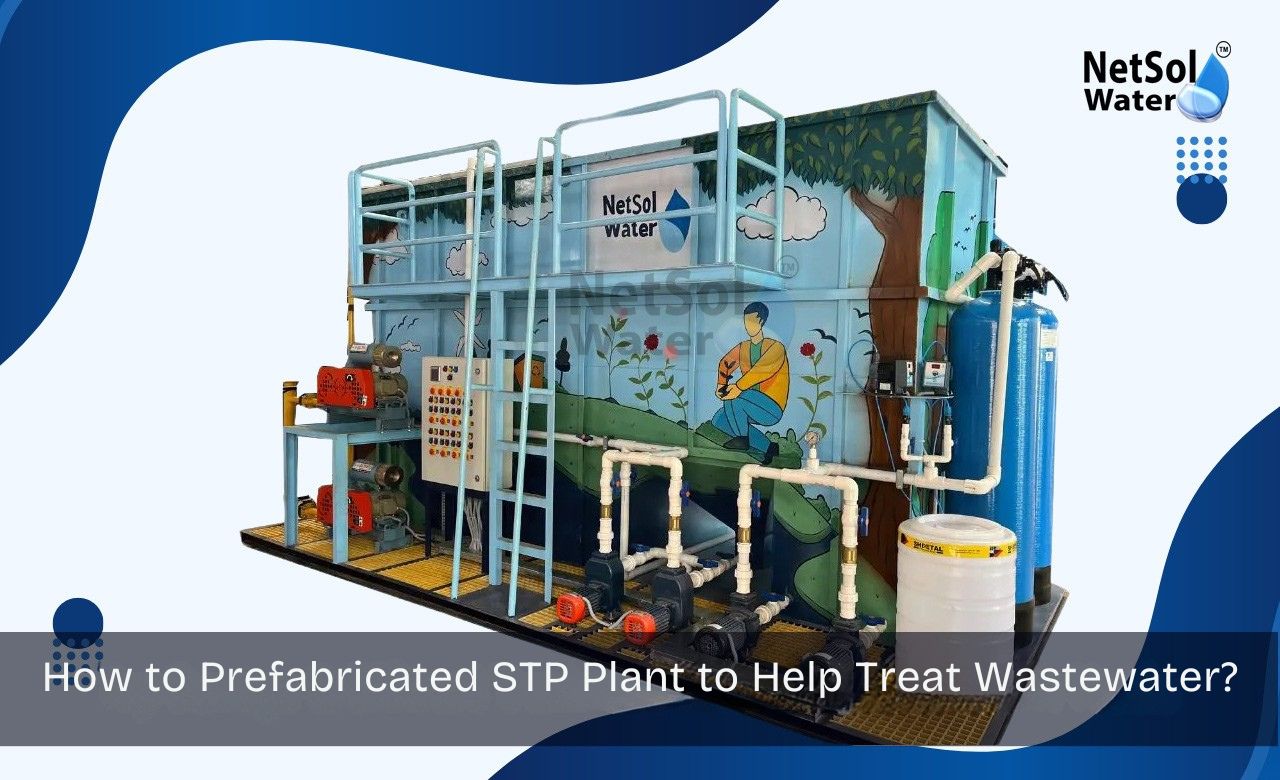
A Prefabricated Sewage Treatment Plant is a sewage treatment unit that a factory builds and then ships to the site for assembly. The modules arrive ready with tanks pumps blowers and control panels. Teams place the units on site and connect them to the building drains and to power. This reduces work on site and shortens the time from purchase to operation. A factory based build also helps maintain uniform quality across parts and components.

Let us have a look on some key elements and how they join to make the plant work. The system starts with a screen that stops large solid items from entering the plant. The next element is a primary chamber where heavy particles settle by gravity. Water then flows into a biological reactor where microbes break down organic matter. Engineers pick an aerobic design when they want faster cleaning and an anaerobic design when they target lower energy use. The treated stream moves to a secondary clarifier that removes microbial biomass and remaining solids. Final steps include disinfection and any polishing needed to meet local rules. Sludge that forms during these steps goes into a sludge handling module for storage and safe removal.

Why Prefabricated STP Plant Matters for Wastewater Treatment

The modular approach also reduces the footprint and allows installation in sites where land is limited. Urban campuses and commercial plazas often have tight space and a compact plant fits better than large tanks on open land.

Let us have a look on how the plant supports public health and environment. Untreated sewage harms rivers and groundwater and it can carry disease. Treating wastewater at source lowers pollution and cuts the load on municipal systems. A Prefabricated STP Plant can produce water that meets reuse standards for flushing, gardening and cooling where rules permit. This lowers fresh water demand and it saves cost over time. Factory based manufacturing brings control over materials and assembly which improves reliability. The result is steady treated water quality day after day.

How Prefabricated STP Plant Works to Treat Wastewater

Knowing the process helps you plan operation and maintenance and it helps staff handle day to day checks. First the system screens out large debris to protect pumps and downstream units. Next heavy solids settle in a primary chamber and oils float to the surface. The clarified stream then goes to the biological stage where microbes digest organic waste and lower chemical and biological oxygen demand. Many prefabricated designs use a mix of processes to balance energy use and removal efficiency.

Let us have a look on final stages that ensure safe output. After the biological reactor the water moves to a secondary clarifier that removes remaining solids and microbes. The clarified effluent then gets disinfected with UV light or a safe dosing method so germs no longer pose a risk. If the site needs reuse water the plant can add polishing steps that remove nutrients and fine particles. Sludge that accumulates goes through dewatering and storage so crews can remove it safely. Netsol Water matches each plant layout to local rules and to the planned reuse so the output meets the required limits.

Where Prefabricated STP Plant Serves Best

Housing societies use these units to treat daily sewage within their campus. Offices, malls and hotels install compact units to manage washroom and kitchen wastewater. Factories choose custom modules when they need to treat process water and to meet discharge rules. Remote sites construction camps and seasonal venues use modular plants as a temporary but effective solution.

Let us have a look on site fit and delivery benefits. The modular design allows placement in basements, rooftops or small open plots. Teams can finish installation in weeks which keeps project timelines tight. Netsol Water provides training and service so operators can manage the plant and keep it reliable. The compact build also makes future expansion easier when flow increases.

Conclusion

Prefabricated STP Plant offers a fast and reliable way to treat sewage and to save water across homes, offices, hotels and industry. The system reduces site work and delivers steady treatment that supports reuse and safe discharge. If you want to explore how this system suits your site contact Netsol Water for a consultation and a site survey. Reach out to learn more and to get a personalized proposal for your project.

Contact Netsol Water at:

Phone: +91-9650608473

Email: enquiry@netsolwater.com

Learn About Sewage Treatment Plant Manufacturer

Netsol Water

Headquarter

Plot No. 164,

Udyog Vihar Extension,

Surajpur, Greater Noida,

Uttar Pradesh 201306
+ 91-9650608473

www.netsolwater.com

info@netsolwater.com

LOCATIONS

We Are Everywhere in India & Overseas.


GET IN TOUCH

Follow Our Activity

TO get an update about our daily activity just follow us and Join the Hands to Save Mother-Earth