Industrial ro plant Archives - Page 12 of 12 - Water Treatment Plants

Screenshot__25_-removebg-preview.png

Industrial RO Plant is regarded as one of the most important crucial water purification technologies. Water pollutants are eliminated by forcing them through a semi-permeable membrane. As a result, pure water fit for drinking is squeezed out. The RO Plant is also utilized for saltwater desalination. RO Water Plants can be a dependable source of potable water.

  • The procedure eliminates dissolved and suspended contaminants, as well as germs.
  • The membrane is permeable enough to allow solvent molecules to pass through but not large ions or molecules to interact with its pores.

Types of Industrial Ro Plant

The following are the numerous types of Industrial Ro Plant to choose from based on your needs:

100 LPH

The 100 LPH Ro Plant is suitable for hospitals, nursing homes, small colleges and offices, institutes, restaurants, and so on. It features one air mass switch and a water output capacity of 100 litres per hour. Its energy-efficient design consumes less electricity and requires little maintenance.

150 LPH

The 150 LPH Industrial Ro Water Plant will meet the needs of 200-300 workers, students, or customers per day.

200 LPH

The 200 LPH Industrial Ro Plant is ideal for small to medium-sized hotels, restaurants, business offices, schools, businesses, industrial buildings, and malls, and it is quite durable.

It is corrosion-free, associated with an environmentally friendly product, and has a water output capacity of 200 litres per hour.

250 LPH

The 250 LPH Industrial Ro Plant is suitable for small to medium-sized industries such as food and beverage, textile, chemical, and so on. It can even be utilised by large hostels, restaurants, universities, and institutions where there is a significant need for water.

350 LPH

350 LPH Industrial Ro Plant is suitable for hospitals, food processing units, hotels, and other similar establishments, and is available in a variety of specifications at low prices.

It has a fantastic performance, a sturdy structure, trouble-free functionality, and consumes less power.

industrial ro plant

500 LPH Ro Plant

500 LPH Ro Plants are factory-made in accordance with industry standards, utilising innovative technology and the best raw materials, and are perfect for drinking water, production, and cleaning in small to medium-sized businesses, factories, hospitals, and enterprises.

This RO plant space is a 300 to 350 sq. linear unit with a half-dozen filtration stages and will efficiently handle the water demand of 800 to 1000 people per day.

Netsol Water : The best manufacturer in India

Leading producer of equipment for water and wastewater treatment facilities is Netsol Water. With its own manufacturing facility in Greater Noida, Uttar Pradesh, India, it begins its adventure in 2012.

We work with several large corporations, including Vedanta, NTPC, Sleep Well, as well as many other start-up companies, hospitals, universities, and schools to clean their organic green waste, wastewater, and water. It offers a wide variety of products for the treatment of waste and wastewater, including sewage treatment plants, effluent treatment plants, commercial and industrial RO plants, green waste converters, water ATMs, swimming pool filtering systems, and others.

How Does Industrial RO Plant Work?

  1. Pre-filtration occurs before the water enters the reverse osmosis process. To eliminate sediment and Cl that could clog or harm the artificial language membrane, pre-filtration often comprises a carbon filter and a sediment filter.
  2. Water is then sent across the RO membrane, where dissolved particles, even those too small to view with a microscope, are eliminated.
  3. Following filtering, water flows to the tank, where it controls until needed. An Industrial RO System continues to filter water until the tank is full, at which point it shuts off.
  4. When you turn on your drinkable regulator, water flows from the tank through another post-filter to make it drinkable before it reaches your regulator.

The Advantages of Having an Industrial Reverse Osmosis Plant:

Sodium should be avoided.

One of the numerous benefits of a RO water filtration system is that it aids in the removal of salt from water. When taken in large quantities, sodium is responsible for high blood pressure, liver problems, and kidney damage.

Lead is removed.

It eliminates lead because it is hazardous to one’s health. When eaten in large quantities, lead causes a slew of health issues. These include increased blood pressure rises, reproductive troubles, nerve damage, and even brain damage. Many people have been harmed as a result of lead in water. A RO Plant can ensure that there are no traces of lead in the water.

It occupies a small amount of space.

It doesn’t matter if your office is small, because our Reverse Osmosis Process has been hailed as a saviour. This RO System is much smaller than other types of water systems, and it may fit underneath room sinks and in small corners.

Makes better-tasting water

While this is, of course, a matter of personal opinion, it may be claimed that RO plants provide better-tasting water. Reverse Osmosis Process gives pure and modern water by removing minerals that impact a water’s natural style.

What do we offer?

Netsol Water is a renowned producer of water and wastewater treatment plants situated in Greater Noida. Based on client feedback and job quality, we are the most demanding organization in the industry. We have a reputation for being the top commercial RO plant manufacturer, industrial RO plant manufacturer, sewage treatment plant manufacturer, and effluent treatment plant manufacturer. Aside from that, our USP is 24×7 customer assistance.

For any assistance, inquiry, or product-purchase-related questions, please call +91-9650608473 or email enquiry@netsolwater.com.


Screenshot-6.png

Industrial ro plant is a water purification technique that is employed globally in a variety of commercial settings. Early in 1950, Jean-Antoine Nollet made the discovery of the reverse osmosis phenomena. However, this method of water filtration was first developed in 1950 at the University of California, Los Angeles. In the US, 15,200 water distillation facilities were using this method to purify water as of 2001.

Reverse osmosis technology has gained popularity for home and commercial water filtration ever since it was first commercialized. The largest difficulty in reverse osmosis industrial applications is removing dissolved pollutants from the water. Reverse osmosis (RO) systems are the greatest option for commercial and industrial water since they can remove chemical contaminants as well as microbiological or biological contamination.

Although Reverse osmosis system is considered to be sufficient phenomenon for water purification but there is always a chance for betterment. Let’s try to know the latest technology employed by industrial RO plant:

What lead to improvision of technology in industrial RO systems:

Both reverse osmosis (RO) and nanofiltration (NF) technologies are distinctive in that they create two effluent streams, a reduced TDS (total dissolved solids) permeate and a higher TDS concentrate, in contrast to dead-head filtration, which has a single flow in and out. While the majority of RO and NF applications work to produce water with a certain quality in the permeate stream, some specialised businesses rely on membranes to separate valuable components from concentrate streams. Whichever procedure is used, there will always be some amount of water that needs to be disposed of or handled in a way that might be expensive or subject to strict regulations.

What to deal with the concentrate water the system produces is one issue that all RO and NF operators face. The reject stream is frequently thought of as an expensive trash that needs to be disposed of in some way. Returning it to a surface water with a big enough mixing zone is the cheapest alternative. Some facilities have the luxury of being able to obtain permits to discharge their effluent into rivers or lakes further downstream; however, these permits are becoming more difficult to renew as regulatory bodies enforce more stringent guidelines regarding the effects of salinity on indigenous lifeforms further downstream. Many operators find it difficult to simply return the concentrate since it has greater TDS levels than the feed and could have a different pH value.

Recent technologies to address the problems:

It has been extensively researched how to treat RO concentrate using electrodialysis reversal (EDR) devices in conjunction with gypsum precipitation to reach very high recovery rates. Since it gives power plants and paper mills the option of treating or recycling waste streams inside the facility and effectively removes the regulatory and financial challenges associated with offsite liquid discharge, the forward-thinking concept of zero liquid discharge (ZLD) has also been around for a while. Power plants and paper mills have been particularly interested in ZLD.

Recently, as facilities put in the tools required to achieve this aim, the same ZLD goals have been applied to RO systems. When one membrane plant learned that their surface water discharge permit would not be renewed, they were compelled to evaluate ZLD. They used a ZLD method that combined multiple technologies for them, including sludge dewatering, ion precipitation, and ultrafiltration. The recovered water was then combined with their industrial ro plant  permeate. The lowered concentrate volume was substantially smaller than the initial 1.2 MGD that had previously been dumped into a canal, but the ensuing solid trash still needed to be disposed of.

As with any plan to replace or expand capital equipment, the up-front and continuing expenses will affect the breadth of investment, but it’s good to know there are workable alternatives. Regulatory and environmental issues may also drive a specific way. It is possible for discharge permit changes to essentially mandate that a site investigate new water treatment options or improvements. Since getting close to zero might be difficult, there are instances when it is simpler to balance the benefits of an action with their costs. Minimal liquid discharge (MLD), a new nomenclature that is starting to gain popularity in the industry, is emerging as a viable alternative to zero discharge. MLD takes into account tested technology, the capital and ongoing expenses of adopting better recovery rates.

The wastewater, biosolid, and reject process streams that were formerly perceived as waste streams to be disposed of at a cost are now recognised as a nutrient source or a concentrated sidestream that may potentially create income. Heat exchangers are being used by municipalities to discover creative applications for the heat extracted from wastewater streams. It is possible to employ recycled nitrogen and phosphorus from wastewaters as fertilisers, and treated biosolids are being investigated for use as landscape compost. A company is currently evaluating RO to recover salts from concentrate in order to produce a product for resale, and the segregation of urine for nitrogen recovery is under investigation.

Conclusion:

Although there are now many creative choices for the reuse and disposal of RO and NF concentrate waters, industry competitiveness and governmental restrictions will continue to spur forward-thinking ideas that will eventually benefit all of us.

For any other support, inquiries, or product purchases, call on +91-9650608473 or email at enquiry@netsolwater.com

Netsol Water

Headquarter

Plot No. 164,

Udyog Vihar Extension,

Surajpur, Greater Noida,

Uttar Pradesh 201306
+ 91-9650608473

www.netsolwater.com

info@netsolwater.com

LOCATIONS

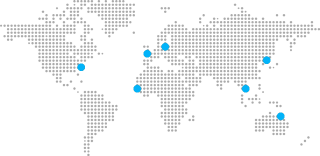
We Are Everywhere in India & Overseas.


GET IN TOUCH

Follow Our Activity

TO get an update about our daily activity just follow us and Join the Hands to Save Mother-Earth