save water Archives - Water Treatment Plants

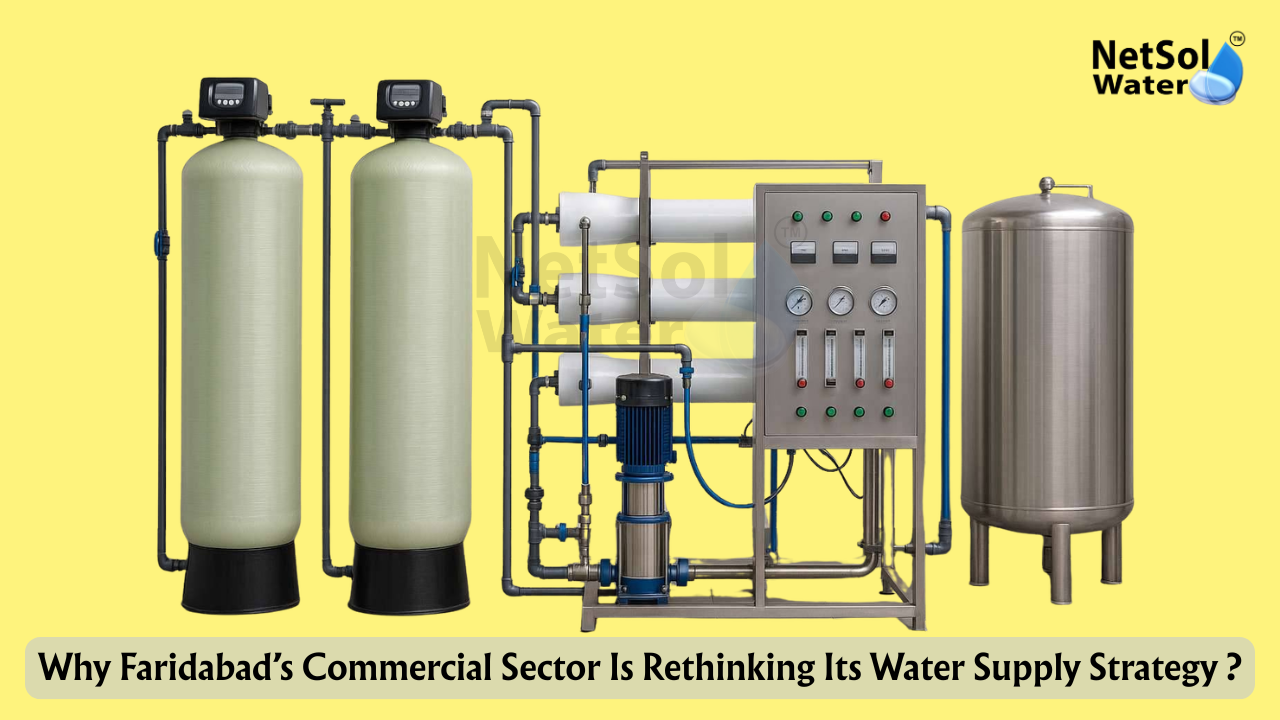
Why Faridabad’s Commercial Sector Is Rethinking Its Water Supply Strategy

Faridabad’s commercial landscape has changed a lot over the past decade. Office complexes, retail spaces, hospitality units, and healthcare facilities have multiplied across the city, and every single one of them depends on a steady, reliable water supply to function properly. What’s changed more recently is how these businesses are sourcing that water, moving away from complete dependence on municipal supply and tankers, and toward setting up their own treatment systems instead. That shift has made choosing the right Commercial RO Plant Manufacturer In Faridabad a genuinely important business decision, not just a facilities checklist item buried somewhere in a procurement list. In this blog we will discuss about the Why Faridabad Is Rethinking Its Water Supply.

Why Municipal Supply Alone Isn’t Enough Anymore

1) Water Quality Varies Too Much to Rely On Blindly

Groundwater and municipal supply across different parts of Faridabad carry noticeably different mineral content and contamination levels. Some pockets deal with higher hardness, others with elevated TDS, and a fair number face inconsistent chlorination levels depending on how far a property sits from the main supply line. A business that just assumes incoming water is clean enough often finds out the hard way, through scaling in equipment, poor tasting drinking water, or complaints from staff and customers alike. By the time these issues surface, they’ve usually already caused quiet damage to boilers, coffee machines, or HVAC systems that nobody traced back to water quality until much later.

2) Supply Interruptions Are More Common Than Businesses Expect

Tanker delays and municipal supply cuts happen more often than most commercial operators plan for, particularly during summer months when demand spikes across the entire city at once. A facility with its own RO system isn’t left scrambling when external supply falls short, which matters a lot for businesses that simply can’t afford downtime. A restaurant without water for a few hours loses more than convenience, it loses service capacity and customer trust. A hospital facing the same gap faces something far more serious.

3) The Hidden Cost of Poor Water Quality

It’s easy to underestimate how much bad water quietly costs a business over time. Scale buildup inside pipes and equipment reduces efficiency and shortens the lifespan of expensive machinery. Staff time gets eaten up dealing with recurring maintenance issues that trace back to the same root cause. And in customer facing businesses, water quality directly shapes perception, nobody wants to drink chalky tasting water at a café or notice spots on glassware at a hotel restaurant.

What Makes a Commercial RO Plant Different From a Residential One

A) Built for Continuous, Heavy Duty Use

Commercial spaces don’t use water the way a household does. Restaurants, hotels, hospitals, and offices need consistent output across long operating hours, sometimes around the clock, and a system built for residential use simply isn’t engineered to handle that kind of continuous demand without breaking down. Residential units are designed around intermittent use, a few hours of actual operation spread across a day. Commercial systems need components rated for sustained operation, tougher pumps, larger membrane housings, and control systems that can handle repeated cycling without wearing out prematurely.

B) Designed Around Actual Daily Consumption

Every commercial property has a different water usage pattern depending on footfall, operating hours, and the nature of the business itself. A hotel’s water demand looks nothing like a corporate office’s, and a hospital’s requirements sit in an entirely different category altogether, often needing higher purity standards for specific medical applications. A properly sized system avoids both the strain of undersizing, which leads to constant strain and shortened equipment life, and the wasted expense of unnecessary oversizing, which just means paying for capacity that sits unused most of the time.

C) Accounting for Peak Hour Demand

Beyond just daily totals, commercial properties often deal with sharp usage spikes tied to specific hours. A restaurant’s water demand during lunch and dinner service looks completely different from its quieter mid afternoon hours. A properly designed system accounts for these peaks rather than just averaging out daily consumption and hoping it holds up when demand actually spikes.

What to Look for Before Choosing a Manufacturer

1) Proper Water Testing Before Any Design Work

A reliable Commercial RO Plant Manufacturer In Faridabad always starts with testing the actual water source, hardness, TDS, contamination levels, before recommending any specific system. Skipping this step means the whole design is built on assumptions rather than facts, and that gap tends to show up months later as underperformance or premature equipment failure that could have been avoided entirely with proper testing upfront.

2) Transparency Around Long Term Running Costs

Installation price is only part of the picture. Membrane replacement, energy consumption, and routine servicing all add up over time, and a trustworthy manufacturer walks clients through these figures honestly as planning ranges, not vague promises meant to close a sale quickly. Businesses that only look at the upfront number often find themselves surprised a year or two later when maintenance costs turn out to be higher than expected, simply because nobody walked them through realistic running costs at the start.

3) Local Presence for Faster Service

When something breaks down in a functioning commercial space, every hour of downtime has a real cost attached to it. A manufacturer based in Faridabad itself can respond same day, rather than leaving a business waiting on a technician traveling in from elsewhere. This matters enormously for businesses operating on tight margins where even a half day of reduced water supply translates directly into lost revenue or operational disruption.

4) Certifications and Proven Track Record

ISO certification and similar credentials aren’t just decorative badges, they reflect whether a manufacturer follows consistent quality standards across every project rather than cutting corners depending on budget or client size. Asking for references from similar commercial properties, hotels, hospitals, or office complexes, gives a much clearer picture of what to actually expect than any brochure ever could.

The Bigger Picture for Faridabad’s Businesses

More commercial operators across the city are starting to see their RO system as core infrastructure, something that directly protects service quality and daily operations, rather than a background utility nobody thinks about until it fails. That mindset is pushing standards higher across the board, and it’s exactly why choosing a manufacturer with genuine local experience and technical depth matters so much right now. Businesses that invested early in proper water treatment are increasingly the ones avoiding the operational headaches that competitors relying on unpredictable municipal supply continue to face.

As Faridabad’s commercial sector keeps expanding, this shift toward self sufficient water treatment is likely to become the norm rather than the exception, particularly for businesses where water quality directly touches customer experience or operational reliability.

NetSol Water brings exactly this kind of grounded, experience led approach to commercial RO installations across Faridabad, starting with proper water testing and building systems designed around each business’s actual daily demand, backed by long term maintenance support that keeps operations running smoothly for years.
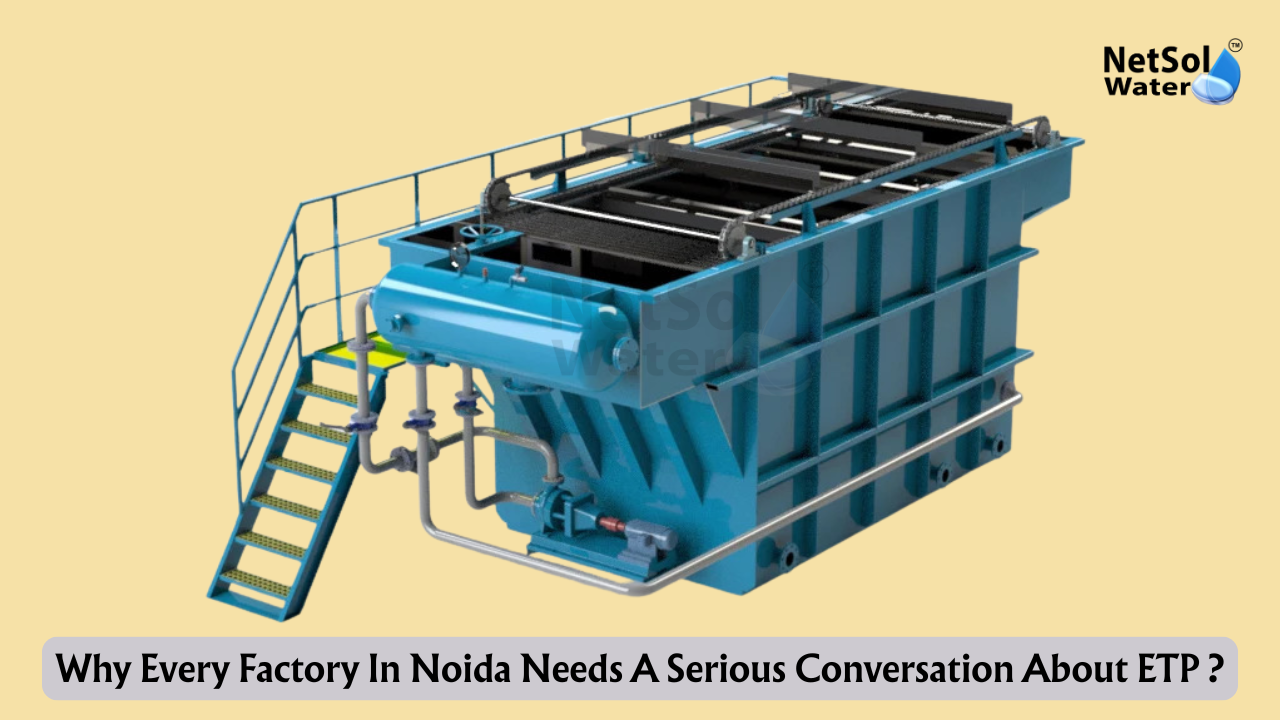
Why Every Factory In Noida Needs A Serious Conversation About ETP

Drive through the industrial sectors of Noida and you’ll see it everywhere. Pharma units, electronics assembly lines, food processing plants, garment dyeing units, all crammed into the same stretch of land, all pumping out wastewater that has to go somewhere. The real question is whether that water gets treated properly, or just slides into a drain that ends up in the Yamuna. In this blog we will discuss about the why every factory in Noida needs a serious conversation about ETP.

That’s not some far off worry. Noida’s industrial clusters span pharma, electronics, garments, and food processing, and when wastewater from these units isn’t treated, it contaminates rivers, groundwater, and soil. That’s not good for anyone living nearby, and it’s definitely not good for the ecosystem. So if you’re running a factory here, or thinking about setting one up, finding the right effluent treatment plant manufacturer in Noida isn’t just another item on a checklist. It’s genuinely the line between operating legally and getting a shutdown notice taped to your gate.

Let’s walk through what an ETP actually does, why Noida units in particular can’t afford to treat this casually, what it realistically costs, and how you pick a manufacturer who sticks around after the installation truck leaves.

What An Effluent Treatment Plant Actually Does

At its core, an effluent treatment plant treats the wastewater coming out of your industrial process before it goes anywhere near a drain or river. And this isn’t like the water going down your kitchen sink at home. Depending on what your factory makes, it could be carrying chemicals, heavy metals, oils, dyes, detergents, all sorts of things you really don’t want ending up in someone’s groundwater.

Breaking Down The Treatment Stages

Most ETPs work through three stages, and each one handles a different part of the job:

  • Physical treatment screens out solids and skims off oils and grease
  • Chemical treatment fixes the pH and pulls out heavy metals through coagulation and flocculation
  • Biological treatment uses microorganisms to break down organic matter, which is where BOD and COD actually come down to safe levels

Why This Isn’t Optional For Industries

Here’s the thing though, an ETP isn’t some nice to have sustainability gesture. It’s the law. CPCB and the Uttar Pradesh Pollution Control Board require industries to treat wastewater before discharge, full stop. Skip this and you’re not just risking your reputation, you’re risking your license to operate.

The Regulatory Reality For Noida Industries

Run a unit in Noida or Greater Noida and you’re not answering to just one authority. You’ve got CPCB setting the baseline nationally, and UPPCB enforcing it right there on your doorstep.

How UPPCB Classifies Industries

UPPCB sorts industries into Red, Orange, Green, and White categories based on how much pollution they’re likely to cause, and each category gets watched differently. A red category unit, say chemical or pharma manufacturing, is going to face way more scrutiny than a green category electronics assembly line. Knowing which bucket you fall into actually changes what kind of ETP setup you need and how often someone’s going to show up to check on you.

Consent To Establish And Consent To Operate

Before you even think about starting production, you need clearance. UPPCB hands out two approvals that matter here, Consent to Establish and Consent to Operate, and getting these sorted is just part of doing business in Uttar Pradesh. No functioning ETP, no approval. It’s really that simple, and no amount of paperwork gets around it.

What Happens When Units Skip This Step

This isn’t hypothetical scare mongering either. Enforcement in the NCR region has been very real. In one crackdown alone, a state pollution board issued notices to 220 industrial units, metal factories, food and beverage manufacturers, even hospitals and hotels, all for letting untreated effluent flow into a drain feeding the Yamuna. And here’s the part that should really worry you, some of those units actually had ETPs installed. They just weren’t switched on. A number of those treatment plants were sitting there non operational while untreated waste kept flowing straight through the sewage system. So owning an ETP and actually running one properly are two very different things, and that gap is exactly where businesses get caught out.

National Standards Are Getting Tighter, Not Looser

If your plan is to install an ETP once and never think about it again, that’s not going to age well. CPCB has been tightening effluent discharge standards, largely because decades of industrial pollution pushed India’s water bodies past what’s acceptable, and state boards now have real time monitoring and much stronger enforcement muscle behind them. The era of getting away with occasional compliance is basically done. Your ETP needs to perform consistently, every single day, not just on the day an inspector happens to walk in.

Choosing The Right Technology For Your ETP

Not every factory needs the same setup, and honestly, treating them the same is where a lot of businesses go wrong. A garment dyeing unit and a pharma plant are dealing with completely different pollutants, so the technology has to actually fit.

Comparing Common ETP Technologies

Here’s a quick side by side to make sense of what’s out there.

Technology

Best Suited For

Key Advantage

Watch Out For

SBR (Sequencing Batch Reactor) Small to mid sized units with fluctuating flow Compact footprint, flexible operation Needs skilled operation for consistent results
MBBR (Moving Bed Biofilm Reactor) Units needing high organic load removal Handles load variation well, low sludge Higher upfront equipment cost
MBR (Membrane Bioreactor) Pharma, food processing, high reuse needs Excellent effluent quality, enables water reuse Membrane fouling needs regular maintenance
Conventional Activated Sludge Larger, stable flow industrial units Well established, easier to troubleshoot Larger land footprint needed

Matching Technology To Industry Type

A pharma unit dealing with acidic, high COD effluent isn’t going to work with the same combination as a food processing plant that’s mostly dealing with organic load and grease. That’s why you want a manufacturer who actually bothers to study your effluent before quoting you anything, rather than one who just hands you a standard package and calls it a day.

Planning Your Budget For An ETP

Cost is usually the first thing people ask about, and fair enough. The honest answer is it depends a lot on your capacity, what’s actually in your effluent, and which technology you go with. What follows are planning ranges, not fixed quotes, because your actual number will shift based on your site and your discharge requirements.

1) Small units treating under 50 KLD usually start in the lower lakhs, climbing with how automated you want things

2) Mid sized units in the 100 to 500 KLD range tend to land in the tens of lakhs, largely driven by tankage, membranes if used, and instrumentation

3) Larger complexes above 500 KLD often need custom engineering, with costs depending heavily on pollutant load and whether zero liquid discharge is part of the design

And don’t just look at the upfront number either. Power, chemical dosing, sludge disposal, manpower, all of that adds up over time. A cheap Effluent Treatment Plant that eats power and chemicals can quietly cost you more over five years than a slightly pricier one that’s actually engineered well.

What Actually Separates A Good Manufacturer From A Risky One

This is honestly where a lot of businesses trip up. They compare quotes side by side without ever asking what’s actually behind those numbers.

1) Look Beyond The Price Tag

The manufacturer with the lowest quote on paper is often cutting corners somewhere, whether that’s equipment quality or skipping a proper effluent characterization study. That shows up later as breakdowns, compliance notices, or an ETP that simply can’t keep up once your factory is running full tilt.

2) Ask About After Installation Support

Installing the plant is honestly only half the job. What matters more is whether the manufacturer sticks around for commissioning, trains your operators properly, and answers the phone when something goes wrong. An ETP that keeps breaking down and takes weeks to fix isn’t saving you money, it’s just a slow moving liability.

3) Check Their Track Record With Similar Industries

Someone who’s built ETPs for pharma units gets acidic effluent handling. Someone who’s worked with food processing plants gets grease and organic load. Ask for references from businesses that look like yours, not just a generic list of past projects.

4) The Real Takeaway

Setting up an effluent treatment plant in Noida isn’t really about checking a compliance box and moving on. It’s about keeping your business away from shutdown notices, protecting the groundwater your neighbors actually rely on, and yes, saving money long term through water reuse and lower operating costs. The rules aren’t loosening up anytime soon, and the units that treat their ETP as an afterthought tend to be the ones making headlines for all the wrong reasons.

Find a manufacturer who actually understands your industry’s effluent profile, designs for your real capacity instead of a cookie cutter template, and stays in the picture after installation. That’s what separates an ETP that just sits there from one that keeps your factory compliant year after year.

Why Commercial RO Plant Is The Right Manufacturer For Your ETP In Noida

If you want an effluent treatment plant manufacturer in Noida who isn’t going to vanish the moment installation wraps up, Commercial RO Plant is worth talking to. They’ve spent years building ETPs across pharma, food processing, textiles, and electronics manufacturing, and that range matters because it means they’re not trying to force every client into the same box.

What really sets them apart is how they start. They actually look at your effluent characteristics, check what CPCB and UPPCB require for your specific discharge, and factor in your budget before ever suggesting whether SBR, MBBR, MBR, or a conventional setup makes sense for you. From there they handle design, installation, commissioning, operator training, and ongoing AMC support, so you’re not left figuring things out on your own six months later when something inevitably needs attention.

If you’re in Noida trying to stay compliant, cut down on freshwater use through treated water reuse, and steer clear of the kind of enforcement action that’s become pretty common across the NCR lately, Commercial RO Plant brings the kind of engineering depth and local know how that gets it right from the start. Whether you’re setting up a new unit or replacing an old, tired ETP, it’s worth getting them in for a site visit before you sign with anyone else.

Commercial-RO-Plant-Manufacturer-in-Delhi-2-1280x720.jpg

Delhi, the vibrant capital city of India, is a hub of commercial and industrial activities. With a rapidly growing population and an expanding economy, the demand for clean and safe water has escalated significantly. Groundwater resources in the city are often contaminated with various pollutants, posing health risks and operational challenges for businesses. In this context, the role of commercial RO plant manufacturer in Delhi has become crucial in providing reliable and efficient water purification solutions tailored to the diverse needs of commercial and industrial establishments.


The Need for Commercial RO Plant Manufacturer in Delhi:

Delhi’s groundwater resources are susceptible to contamination from various sources, including industrial effluents, sewage discharge, and agricultural runoff. These contaminants can include dissolved solids, heavy metals, microorganisms, and organic compounds, rendering the water unsuitable for human consumption and industrial processes. The scarcity of clean water resources has posed significant challenges for businesses operating in the city, necessitating the implementation of advanced water treatment solutions. Commercial reverse osmosis (RO) plants have emerged as a reliable and efficient solution to address these water quality concerns. These plants employ a multi-stage filtration process, with RO membranes as the primary purification technology, capable of removing a wide range of contaminants and producing high-quality purified water.


Partnering with a reputable Commercial RO Plant Manufacturers in Delhi like Netsol Water offers numerous benefits to businesses, including:


  1. Customized Solutions: Manufacturers can design and engineer RO plants tailored to the specific water quality requirements, treatment capacities, and space constraints of each client.


2. Quality Assurance: Reputable manufacturers like Netsol Water adhere to stringent quality standards, ensuring the use of high-grade materials and components, resulting in efficient and durable RO plant installations.


3. Technical Expertise: Experienced manufacturers possess a deep understanding of water treatment technologies, enabling them to provide comprehensive solutions optimised for performance and energy efficiency.


4. Regulatory Compliance: Commercial RO plants installed by reliable manufacturers ensure compliance with relevant regulations and industry standards, minimising potential legal and operational risks.


5. Water Conservation and Sustainability: Well-designed commercial RO plants can facilitate water recycling and reuse, contributing to water conservation efforts and promoting environmental sustainability.


The Role of Netsol Water as a Commercial RO Plant Manufacturer in Delhi:

Netsol Water has emerged as a leading Commercial RO Plant Manufacturer in Delhi, offering innovative and sustainable water treatment solutions tailored to the diverse needs of commercial and industrial clients. With a team of experienced engineers and a state-of-the-art manufacturing facility, Netsol Water provides end-to-end services, from conceptualisation and design to installation, commissioning, and after-sales support.


Netsol Water’s commercial RO plant offerings are designed to deliver consistent performance, energy efficiency, and operational reliability. Their solutions incorporate advanced features such as automated process control, real-time monitoring, and remote access capabilities, ensuring optimal plant operation and minimising downtime.


Netsol Water has a proven track record of successfully executing numerous commercial RO plant projects in Delhi, catering to the water treatment needs of various sectors, including hospitality, manufacturing, and residential complexes. Their expertise in water treatment technologies, combined with a commitment to quality and customer satisfaction, sets them apart as a trusted partner for businesses seeking reliable and sustainable water purification solutions in the capital city.


Conclusion:

As Delhi grows, the need for clean water will increase. This highlights the importance of reliable RO plant manufacturers in the city. Businesses in Delhi can benefit from working with trusted manufacturers like Netsol Water. They provide customised RO plant solutions for a steady supply of high-quality purified water, water recycling, and compliance with regulations.


By investing in advanced water treatment infrastructure and collaborating with experienced commercial RO plant manufacturers, businesses in Delhi can not only enhance operational efficiency but also contribute to a more sustainable and water-secure future for the city. As environmental concerns and water scarcity challenges continue to shape business operations, the role of these manufacturers will become increasingly essential in facilitating responsible growth and promoting water conservation practices.


To explore customised Commercial RO plants, Industrial RO plants, ETP or STP solutions for your needs in your areas and nearby regions, contact Netsol Water at:


Phone: +91-965-060-8473

Email: enquiry@netsolwater.com


Netsol Water

Headquarter

Plot No. 164,

Udyog Vihar Extension,

Surajpur, Greater Noida,

Uttar Pradesh 201306
+ 91-9650608473

www.netsolwater.com

info@netsolwater.com

LOCATIONS

We Are Everywhere in India & Overseas.


GET IN TOUCH

Follow Our Activity

TO get an update about our daily activity just follow us and Join the Hands to Save Mother-Earth