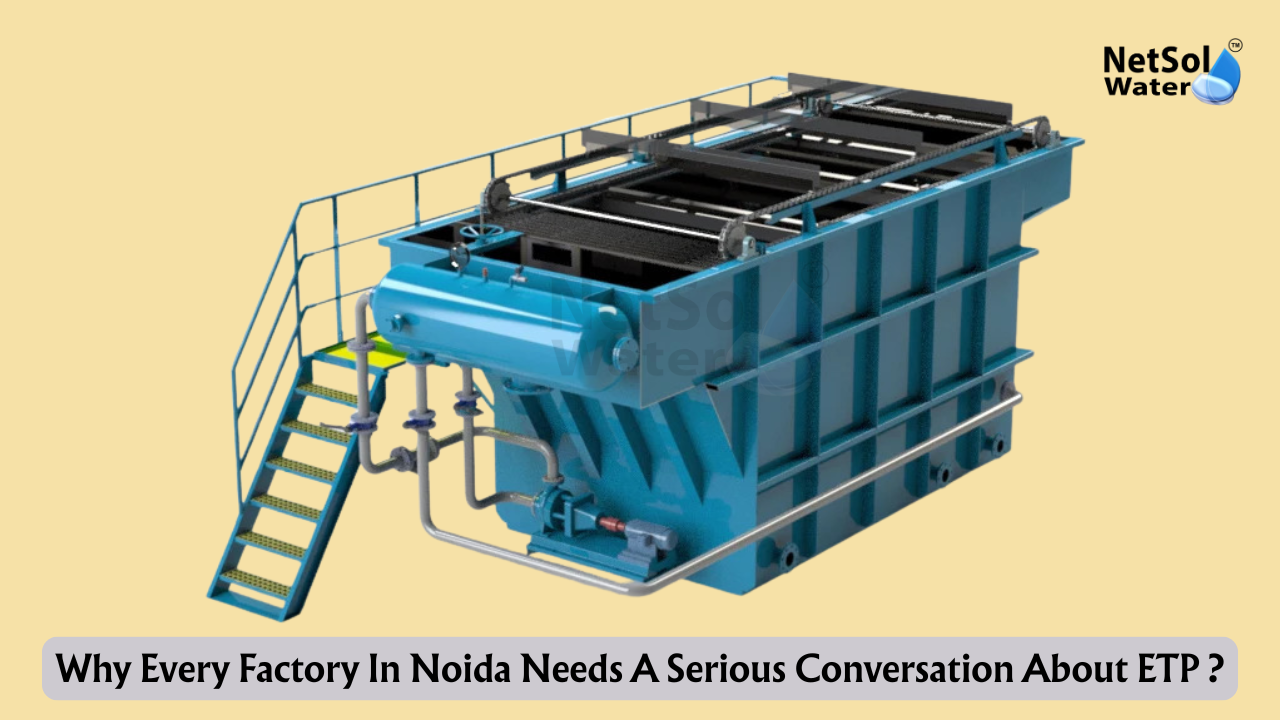
Drive through the industrial sectors of Noida and you’ll see it everywhere. Pharma units, electronics assembly lines, food processing plants, garment dyeing units, all crammed into the same stretch of land, all pumping out wastewater that has to go somewhere. The real question is whether that water gets treated properly, or just slides into a drain that ends up in the Yamuna. In this blog we will discuss about the why every factory in Noida needs a serious conversation about ETP.
That’s not some far off worry. Noida’s industrial clusters span pharma, electronics, garments, and food processing, and when wastewater from these units isn’t treated, it contaminates rivers, groundwater, and soil. That’s not good for anyone living nearby, and it’s definitely not good for the ecosystem. So if you’re running a factory here, or thinking about setting one up, finding the right effluent treatment plant manufacturer in Noida isn’t just another item on a checklist. It’s genuinely the line between operating legally and getting a shutdown notice taped to your gate.
Let’s walk through what an ETP actually does, why Noida units in particular can’t afford to treat this casually, what it realistically costs, and how you pick a manufacturer who sticks around after the installation truck leaves.
What An Effluent Treatment Plant Actually Does
At its core, an effluent treatment plant treats the wastewater coming out of your industrial process before it goes anywhere near a drain or river. And this isn’t like the water going down your kitchen sink at home. Depending on what your factory makes, it could be carrying chemicals, heavy metals, oils, dyes, detergents, all sorts of things you really don’t want ending up in someone’s groundwater.
Breaking Down The Treatment Stages
Most ETPs work through three stages, and each one handles a different part of the job:
- Physical treatment screens out solids and skims off oils and grease
- Chemical treatment fixes the pH and pulls out heavy metals through coagulation and flocculation
- Biological treatment uses microorganisms to break down organic matter, which is where BOD and COD actually come down to safe levels
Why This Isn’t Optional For Industries
Here’s the thing though, an ETP isn’t some nice to have sustainability gesture. It’s the law. CPCB and the Uttar Pradesh Pollution Control Board require industries to treat wastewater before discharge, full stop. Skip this and you’re not just risking your reputation, you’re risking your license to operate.
The Regulatory Reality For Noida Industries
Run a unit in Noida or Greater Noida and you’re not answering to just one authority. You’ve got CPCB setting the baseline nationally, and UPPCB enforcing it right there on your doorstep.
How UPPCB Classifies Industries
UPPCB sorts industries into Red, Orange, Green, and White categories based on how much pollution they’re likely to cause, and each category gets watched differently. A red category unit, say chemical or pharma manufacturing, is going to face way more scrutiny than a green category electronics assembly line. Knowing which bucket you fall into actually changes what kind of ETP setup you need and how often someone’s going to show up to check on you.
Consent To Establish And Consent To Operate
Before you even think about starting production, you need clearance. UPPCB hands out two approvals that matter here, Consent to Establish and Consent to Operate, and getting these sorted is just part of doing business in Uttar Pradesh. No functioning ETP, no approval. It’s really that simple, and no amount of paperwork gets around it.
What Happens When Units Skip This Step
This isn’t hypothetical scare mongering either. Enforcement in the NCR region has been very real. In one crackdown alone, a state pollution board issued notices to 220 industrial units, metal factories, food and beverage manufacturers, even hospitals and hotels, all for letting untreated effluent flow into a drain feeding the Yamuna. And here’s the part that should really worry you, some of those units actually had ETPs installed. They just weren’t switched on. A number of those treatment plants were sitting there non operational while untreated waste kept flowing straight through the sewage system. So owning an ETP and actually running one properly are two very different things, and that gap is exactly where businesses get caught out.
National Standards Are Getting Tighter, Not Looser
If your plan is to install an ETP once and never think about it again, that’s not going to age well. CPCB has been tightening effluent discharge standards, largely because decades of industrial pollution pushed India’s water bodies past what’s acceptable, and state boards now have real time monitoring and much stronger enforcement muscle behind them. The era of getting away with occasional compliance is basically done. Your ETP needs to perform consistently, every single day, not just on the day an inspector happens to walk in.
Choosing The Right Technology For Your ETP
Not every factory needs the same setup, and honestly, treating them the same is where a lot of businesses go wrong. A garment dyeing unit and a pharma plant are dealing with completely different pollutants, so the technology has to actually fit.
Comparing Common ETP Technologies
Here’s a quick side by side to make sense of what’s out there.
|
Technology |
Best Suited For |
Key Advantage |
Watch Out For |
| SBR (Sequencing Batch Reactor) | Small to mid sized units with fluctuating flow | Compact footprint, flexible operation | Needs skilled operation for consistent results |
| MBBR (Moving Bed Biofilm Reactor) | Units needing high organic load removal | Handles load variation well, low sludge | Higher upfront equipment cost |
| MBR (Membrane Bioreactor) | Pharma, food processing, high reuse needs | Excellent effluent quality, enables water reuse | Membrane fouling needs regular maintenance |
| Conventional Activated Sludge | Larger, stable flow industrial units | Well established, easier to troubleshoot | Larger land footprint needed |
Matching Technology To Industry Type
A pharma unit dealing with acidic, high COD effluent isn’t going to work with the same combination as a food processing plant that’s mostly dealing with organic load and grease. That’s why you want a manufacturer who actually bothers to study your effluent before quoting you anything, rather than one who just hands you a standard package and calls it a day.
Planning Your Budget For An ETP
Cost is usually the first thing people ask about, and fair enough. The honest answer is it depends a lot on your capacity, what’s actually in your effluent, and which technology you go with. What follows are planning ranges, not fixed quotes, because your actual number will shift based on your site and your discharge requirements.
1) Small units treating under 50 KLD usually start in the lower lakhs, climbing with how automated you want things
2) Mid sized units in the 100 to 500 KLD range tend to land in the tens of lakhs, largely driven by tankage, membranes if used, and instrumentation
3) Larger complexes above 500 KLD often need custom engineering, with costs depending heavily on pollutant load and whether zero liquid discharge is part of the design
And don’t just look at the upfront number either. Power, chemical dosing, sludge disposal, manpower, all of that adds up over time. A cheap Effluent Treatment Plant that eats power and chemicals can quietly cost you more over five years than a slightly pricier one that’s actually engineered well.
What Actually Separates A Good Manufacturer From A Risky One
This is honestly where a lot of businesses trip up. They compare quotes side by side without ever asking what’s actually behind those numbers.
1) Look Beyond The Price Tag
The manufacturer with the lowest quote on paper is often cutting corners somewhere, whether that’s equipment quality or skipping a proper effluent characterization study. That shows up later as breakdowns, compliance notices, or an ETP that simply can’t keep up once your factory is running full tilt.
2) Ask About After Installation Support
Installing the plant is honestly only half the job. What matters more is whether the manufacturer sticks around for commissioning, trains your operators properly, and answers the phone when something goes wrong. An ETP that keeps breaking down and takes weeks to fix isn’t saving you money, it’s just a slow moving liability.
3) Check Their Track Record With Similar Industries
Someone who’s built ETPs for pharma units gets acidic effluent handling. Someone who’s worked with food processing plants gets grease and organic load. Ask for references from businesses that look like yours, not just a generic list of past projects.
4) The Real Takeaway
Setting up an effluent treatment plant in Noida isn’t really about checking a compliance box and moving on. It’s about keeping your business away from shutdown notices, protecting the groundwater your neighbors actually rely on, and yes, saving money long term through water reuse and lower operating costs. The rules aren’t loosening up anytime soon, and the units that treat their ETP as an afterthought tend to be the ones making headlines for all the wrong reasons.
Find a manufacturer who actually understands your industry’s effluent profile, designs for your real capacity instead of a cookie cutter template, and stays in the picture after installation. That’s what separates an ETP that just sits there from one that keeps your factory compliant year after year.
Why Commercial RO Plant Is The Right Manufacturer For Your ETP In Noida
If you want an effluent treatment plant manufacturer in Noida who isn’t going to vanish the moment installation wraps up, Commercial RO Plant is worth talking to. They’ve spent years building ETPs across pharma, food processing, textiles, and electronics manufacturing, and that range matters because it means they’re not trying to force every client into the same box.
What really sets them apart is how they start. They actually look at your effluent characteristics, check what CPCB and UPPCB require for your specific discharge, and factor in your budget before ever suggesting whether SBR, MBBR, MBR, or a conventional setup makes sense for you. From there they handle design, installation, commissioning, operator training, and ongoing AMC support, so you’re not left figuring things out on your own six months later when something inevitably needs attention.
If you’re in Noida trying to stay compliant, cut down on freshwater use through treated water reuse, and steer clear of the kind of enforcement action that’s become pretty common across the NCR lately, Commercial RO Plant brings the kind of engineering depth and local know how that gets it right from the start. Whether you’re setting up a new unit or replacing an old, tired ETP, it’s worth getting them in for a site visit before you sign with anyone else.