effluent treatment plant Archives - Page 9 of 9 - Water Treatment Plants

Screenshot-65-1-1280x775.png

Effluent Treatment Plants (ETPs)

ETPs are used to treat industrial, commercial, and residential wastewater by removing contaminants such as toxins, bacteria, wastewater, and sludge. This allows for the wastewater to be reused and for it to be safely disposed of into the environment. As we all know, there are four major types of pollution: water pollution, noise pollution, soil pollution, and air pollution. Effluent Treatment Plant Process is therefore required out of these four types to prevent water pollution, which indirectly helps to prevent soil pollution and air pollution.Effluent Treatment Plant Process flow diagram tells everything about the water treatment.

Flow Diagram of an ETP

As demonstrated in the design above, the site and industry have a significant influence on the design of an effluent treatment facility. Site characteristics (soils, topology, geology, hydrology, climate), as well as wastewater, are significant considerations taken into account while developing ETP. When constructing a wastewater treatment plant’s procedure, treated and untreated effluent requirements are also taken into account.

Process of an ETP:

An ETP receives untreated wastewater as input (influent), treats it, and then creates effluent. It also recovers useful materials from the effluent. For it to function properly, it must go through a number of processes, including equalisation, pH control, coagulation, sedimentation, filtration, disinfection, and sludge drying.

ETP plants are essential to this procedure because they offer the following advantages:

  1. Lowers the cost of off-site treatment.
  2. No unnecessary water is used in the processing.
  3. It helps your company become self-sufficient.
  4. Contributes to the protection of the environment for future generations and the decrease of pollution in natural water bodies.
  5. Utilizing an effluent treatment facility is the most economical and environmentally friendly option.
Why Is Effluent Treatment Necessary?

As industrial and commercial wastewater quality rises quickly today, it pollutes the environment, contaminates our natural resources, and spreads a variety of dangerous diseases. The government also takes rigorous action against this problem and mandates the establishment of ETP Plants for the safe disposal of treated wastewater into rivers, ponds, lakes, or any other natural facility without causing any pollution. The need can be summarised as follows:

  1. The first requirement for an ETP is the cleaning and recycling of industrial effluent.
  2. To reduce the amount of freshwater or drinkable water used in industries.
  3. To lower the costs associated with buying water.
  4. To avoid costly penalties by adhering to government rules for the release of environmental pollutants from diverse sectors.
  5. To prevent pollution in the environment and support long-term growth.
Effluent Treatment Plant Benefits
  1. Wastewater is transformed into clean, safe water using ETP.
  2. It helps us save money.
  3. It guards against pollution entering our environment.
  4. It guards against a variety of diseases brought on by sewage.
  5. ETP aids in reducing waste.
  6. By reusing old or contaminated water, it conserves water.
  7. It aids in the environmentally safe disposal of wastewater.
  8. Transporting clean water is not necessary with ETP.
Conclusion

Netsol Water are offering the best end-to-end water and wastewater treatment services globally for years. In order to achieve the finest effluent treatment outcomes, our ETP uses physical, chemical, biological, and membrane processes to clean wastewater for its effective reuse and discharges safe water into the environment.

Leading water and wastewater treatment plant manufacturer Netsol Water is situated in Greater Noida. Based on client feedback and the calibre of our work, we are the most demanding organisation in the sector. We are regarded as the top producers of industrial RO plants, commercial RO plants, sewage treatment plants, water softening plants, and effluent treatment plants. Additionally, our USP is our 24-hour customer service. If you have any questions about our support, inquiries, or product purchases, call us at +91-9650608473 or send an email to enquiry@netsolwater.com.
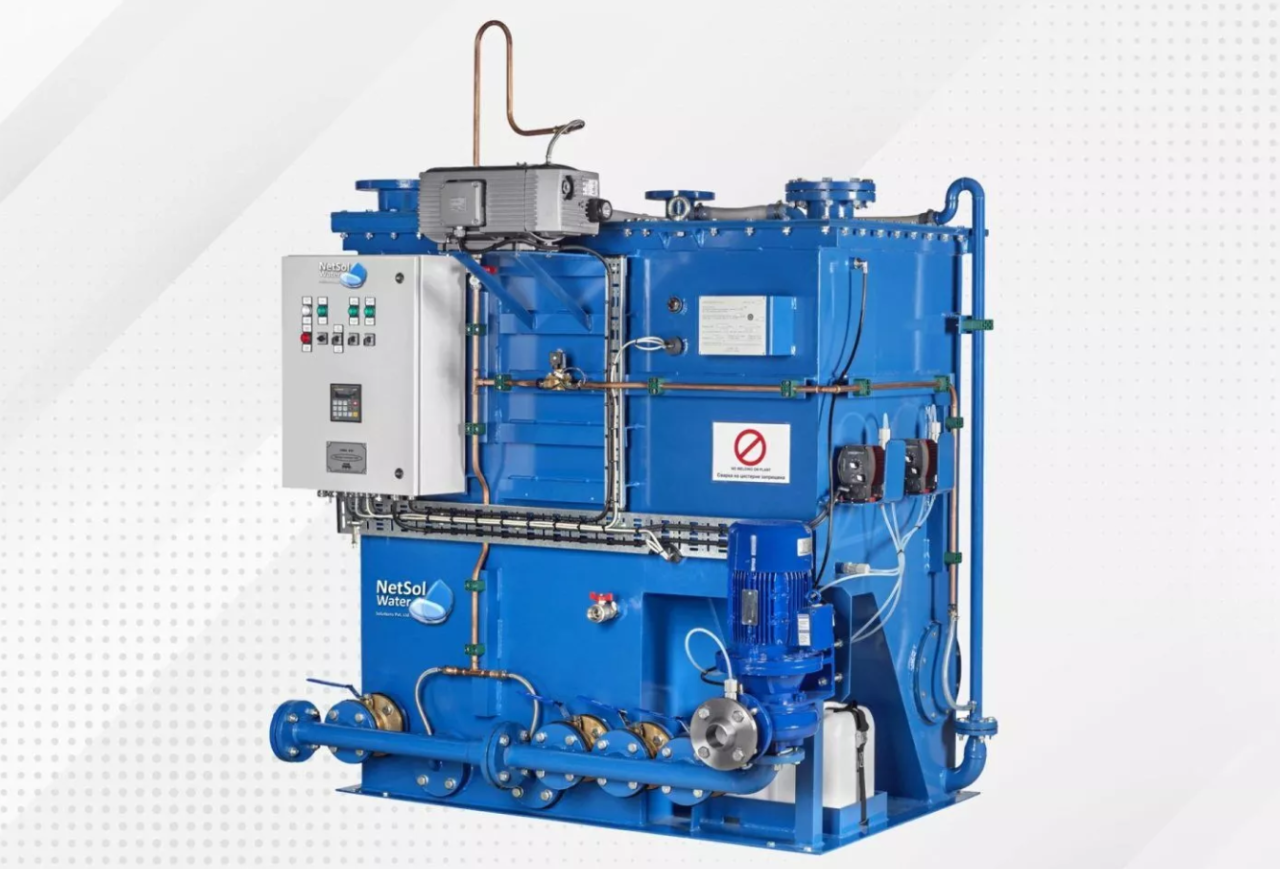
etp-netsol-1280x869.png

Industrial wastewater contains a variety of pollutants, necessitating the use of a specific treatment method called Effluent treatment plant, also known as an ETP. The goal of Effluent treatment plant process is to discharge clean water into the environment, while protecting it from the negative effects of the effluent.

Depending on the industry, industrial effluents comprise a range of different substances. Some effluents contain hazardous substances (e.g., cyanide), while others contain oils and grease. Additionally, few degradable organic contaminants are also present in factory effluents from the production industries.

Let’s understand the treatment processes of effluent treatment plants or ETPs.

Effluent Treatment Plant Design

The ETP design is based on the kind and volume of effluent discharged by various industries, as well as the availability of land. In most of the cases, Common Effluent Treatment Plants (CETP) is preferable over Effluent Treatment Plants, if land is scarce in the industry.

Effluent treatment plant process

Depending on the kind of effluent, different effluents require different treatments. Before effluent is released into the environment, wastewater enters the effluent treatment plant and undergoes a number of processes.

The steps of the effluent treatment plant process are as follows:

  1. Preliminary Treatment

The main aim of preliminary treatment is physical separation of large-sized pollutants and materials, like cloth, paper, plastic, and wood logs. This process entails:

  • Screening: In effluent treatment processes, this is the initial unit activity that takes place. It uses equipment, known as a screen that consists of consistently sized apertures, used to catch big floating objects.
  • Sedimentation: It is a physical method of purifying water that eliminates suspended particulates from the water, by employing gravity.
  • Grit Chamber: The effluent that enters the grit chamber eliminates the heavy inorganic materials, which have found their way into the sewers, such as gravel, metal shavings, and sand. This method is essential as grit removal can help in avoiding pump damage and operational issues.
  • Clarifiers: Before biological treatment, particles deposited by sedimentation are continuously removed from the tank, by mechanical means.
  1. Primary treatment

Its goal is to remove items the float and settle such as suspended solids and organic debris. Both physical and chemical techniques are employed in this treatment. It contains:

  • Coagulation: It is a procedure that involves the addition of coagulants, in order to hasten the quick settling of tiny solid particles in a liquid, into larger mass. It enables filtration and sedimentation for particle removal.
  • Flocculation: It is a physical process and involves destabilization of particles. These particles are then combined into substantial aggregates, in order to make it simple to remove them from the water.
  • Neutralization: The major goal of this procedure is to keep the pH in the range of 6-9, which is necessary to satisfy the needs of the various ETP processing units.
  • Primary Clarifiers: These are used to decrease the water’s velocity so that organic solids will settle to the tank’s bottom, and contain equipment for removing floating solids and oil from the surface.
  1. Secondary or biological treatment

The major goal of this treatment is to remove any remaining organic matter and suspended particulates from the effluent, from the initial treatment. This stage involves biological activities.

  • Activated Sludge Process: It uses air and a biological floc made of bacteria to clean industrial effluent.
  • Aerated Lagoons: It is an artificial aeration system that is added to a treatment pond, to aid in the biological oxidation of wastewater.
  • Trickling filters: These filters are also referred to as sprinkling filters, and are frequently used for the biological treatment of sewage and industrial wastewater.
  • Rotating Biological Contactor: This process involves exposing wastewater to a biological medium, in order to filter out pollutants before releasing the cleaned wastewater into the environment.
  1. Advanced/tertiary treatment

The goal of tertiary treatment is to provide a final step of treatment to enhance the effluent quality, to the appropriate level before it is reused, recycled, or released into the environment.

  • Chemical coagulation and sedimentation: Both methods are employed to increase the removal of solids from effluent.
  • Filtration: The cleared effluent is sent through the nearby filtration plant’s big filter blocks, to ensure high-quality water.
  • Reverse osmosis: In this method, effluent is forced under pressure across a membrane, which traps impurities on one side and lets clean water through to the other.
  • UV disinfection: This method is regarded as the best one for treating effluent. By maintaining the water quality, it ensures that no residual infection is left in the water.
Conclusion

An ETP system is a fully automated system. Because of this, it needs utility services for installation and appropriate maintenance, just like any other mechanical plant.

Choose the best manufacturers of effluent treatment plants in India

Since a decade, Netsol Water have been providing water, wastewater and effluent treatment services in India. We have extensive knowledge and expertise in the operation and upkeep of water treatment facilities, wastewater treatment facilities (ETP/STP), softening processes, and iron removal methods. We construct and manage water treatment facilities that adhere to state pollution control board standards.

For any other support, inquiries, or product purchases, call on +91-9650608473 or email at enquiry@netsolwater.com

Netsol Water

Headquarter

Plot No. 164,

Udyog Vihar Extension,

Surajpur, Greater Noida,

Uttar Pradesh 201306
+ 91-9650608473

www.netsolwater.com

info@netsolwater.com

LOCATIONS

We Are Everywhere in India & Overseas.


GET IN TOUCH

Follow Our Activity

TO get an update about our daily activity just follow us and Join the Hands to Save Mother-Earth